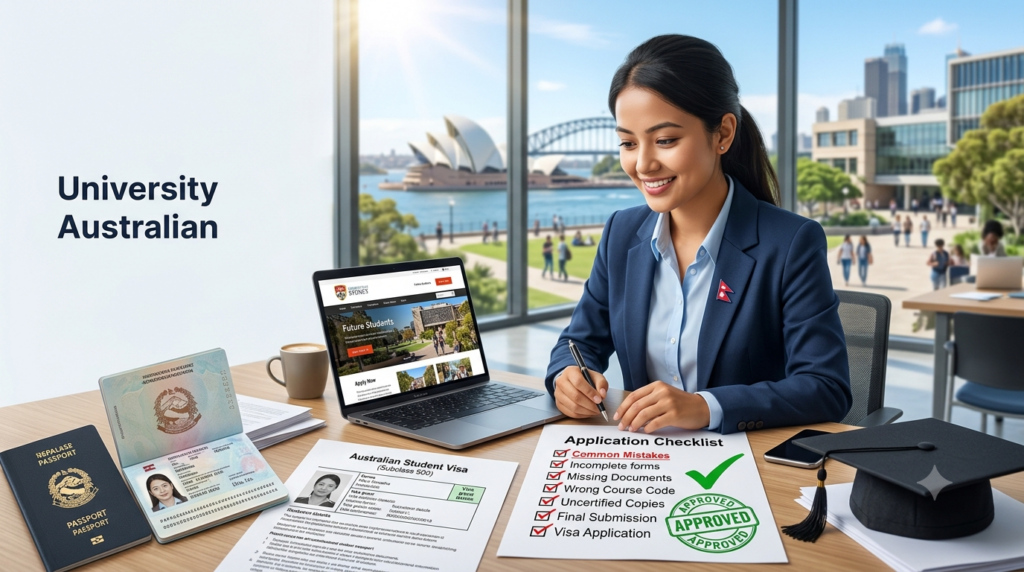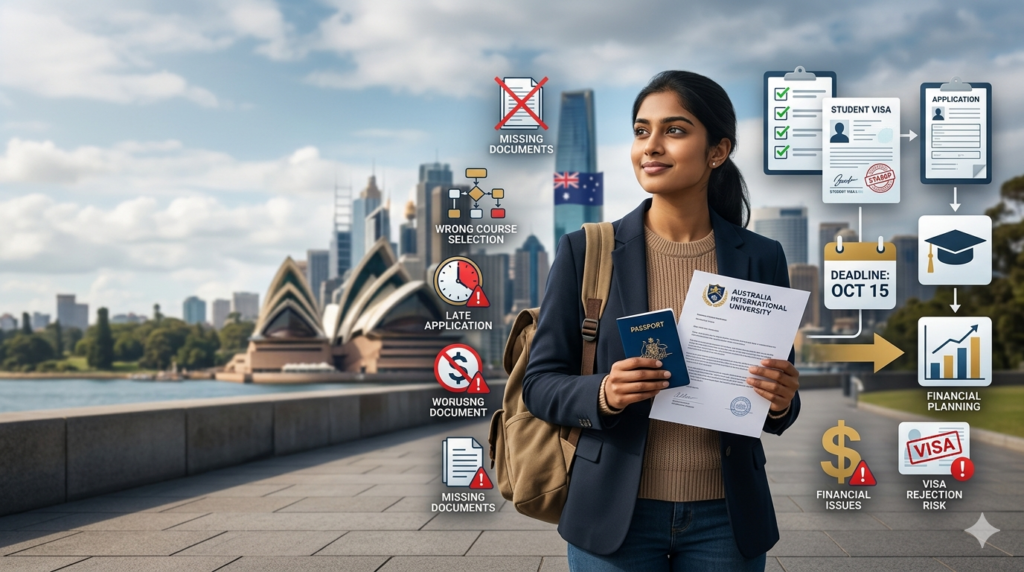
Top Mistakes Students Make When Applying to Study in Australia

Australia remains one of the most popular destinations for international students. According to recent Australian government education data, more than 622,000 international students were studying in Australia during early 2026. Students from countries like China, India, Nepal, Vietnam, and Bangladesh continue to choose Australia because of its globally recognized universities, excellent quality of life, and strong career opportunities. Recent data also shows that Nepal is among the top source countries for international students in Australia. This highlights how many Nepali students are actively pursuing Australian education opportunities today. However, the application process has become more competitive, and even small mistakes can lead to delays, visa refusals, or rejected university applications.

For many students, studying in Australia is a life-changing decision. It involves a significant investment of time, money, and effort. Unfortunately, many applicants focus only on getting admission and overlook critical parts of the process. Some choose courses without proper research, while others submit incomplete documents or fail to prepare financially. These mistakes can create unnecessary stress and even jeopardize a student’s dream of studying abroad. Understanding these common errors before starting your application can save you from costly setbacks.

If you are planning to study in Australia, it is important to approach the process carefully. Whether you are applying for a bachelor’s degree, master’s program, diploma, or vocational course, every step matters. Working with experienced education consultants can also make a significant difference. Students can explore professional guidance and application support through New Era Education to simplify the entire process.

Why Careful Planning Matters

Many students underestimate how detailed the Australian admission and visa process can be. Universities require academic records, proof of English proficiency, financial documents, identification papers, and personal statements. On top of that, student visa requirements have become stricter in recent years. Reports indicate that visa refusal rates have increased as authorities apply more scrutiny to applications and supporting documents. This means students need to be more careful than ever when preparing their applications.

Careful planning helps students avoid unnecessary delays. When you start early, you have enough time to gather documents, prepare for English language tests, compare universities, and understand financial obligations. Planning also allows students to identify suitable courses that align with their career goals. Instead of rushing through the process, students can make informed decisions that improve both admission and visa success rates.

Choosing a Course Without Research

One of the biggest mistakes students make is selecting a course simply because friends or family members recommend it. While advice from others can be helpful, every student has different interests, strengths, and career aspirations. Choosing a course without understanding its curriculum, career prospects, and industry demand can lead to disappointment later.

Students should research job opportunities connected to their chosen field. They should also examine future industry trends in Australia and globally. A course may sound attractive today but may not offer strong employment opportunities after graduation. Taking the time to understand what the course teaches and where it can lead professionally helps students make better decisions.

Before finalizing any course, students should compare multiple options and seek professional advice. Educational consultants can help students evaluate whether a particular program aligns with their academic background and long-term goals. This simple step can prevent years of frustration and regret.

Selecting the Wrong University

Another common mistake is focusing only on university rankings. While rankings are important, they should not be the only factor influencing your decision. Different universities have different strengths, teaching styles, support services, campus environments, and industry connections.

Some students choose a university because it is famous without checking whether it offers strong programs in their chosen field. Others ignore factors such as location, accommodation availability, tuition fees, and student support services. A university that ranks slightly lower but offers better practical training and industry exposure may actually be the better choice.

Students should carefully compare universities and institutions before applying. Useful information about Australian universities, admissions, and study pathways can often be found through education experts such as New Era Education Study Abroad Services.

Ignoring Entry Requirements

Every Australian university has specific admission requirements. These may include minimum academic scores, English language test results, prerequisite subjects, and additional supporting documents. Many students assume they meet the requirements without checking the details carefully.

Failing to meet entry requirements can result in application rejection. Students should review university websites and official course information before submitting applications. They should also verify whether they need IELTS, PTE, TOEFL, or another approved English language qualification.

Entry Requirements Checklist

RequirementImportance
Academic transcriptsVerify educational qualifications
English proficiency testDemonstrate language ability
PassportIdentity verification
Statement of PurposeExplain study goals
Financial documentsSupport visa application
Recommendation lettersStrengthen application

Taking time to verify these requirements can significantly improve your chances of success.

Submitting Incomplete Documents

Incomplete applications are among the most avoidable mistakes. Universities and visa officers rely heavily on documentation to assess applications. Missing even one important document can delay processing or lead to rejection.

Students often forget to submit academic transcripts, financial evidence, identification documents, or English test results. Some submit outdated versions of documents or provide unclear scans. These small errors can create major complications during assessment.

Creating a detailed document checklist is one of the simplest ways to avoid this problem. Review every requirement multiple times before submission. If possible, ask a professional consultant to verify your application package before it is sent.

Writing a Weak SOP

The Statement of Purpose, commonly known as the SOP, plays a crucial role in both university admissions and visa applications. Yet many students treat it as a formality. Some copy SOPs from the internet, while others submit generic statements that fail to explain their goals clearly.

A strong SOP should explain why you chose your course, why you selected Australia, how the program fits your career plans, and how it relates to your previous education. It should be genuine, personal, and specific.

Students should avoid exaggerated claims and focus on presenting honest information. Visa officers often review SOPs carefully, and inconsistencies can raise concerns. A well-written SOP can strengthen an application significantly.

Poor Financial Planning

Financial preparation is another area where students often make mistakes. Studying in Australia involves more than tuition fees. Students must also budget for accommodation, transportation, food, health insurance, and personal expenses.

Recent visa policy changes and increasing costs have made financial planning even more important. Students should ensure they have sufficient funds and proper documentation to demonstrate financial capability. Financial evidence is a key factor during visa assessment.

Many students focus only on first-year expenses and underestimate future costs. Creating a realistic financial plan before departure helps avoid stress after arrival. Students should also research scholarship opportunities that may reduce their overall expenses.

Applying Too Late

Timing plays a critical role in the admission process. Many students wait until the last minute to apply. This leaves little room for document corrections, test retakes, or unexpected delays.

Universities have application deadlines, and visa processing can take time. Delayed applications can cause students to miss their intended intake. In some cases, they may need to postpone their studies by several months.

Starting the process early gives students more flexibility. Ideally, students should begin planning at least six to twelve months before their desired intake. Early preparation increases the likelihood of a smoother and less stressful application experience.

Providing Incorrect Information

Honesty is essential throughout the application process. Some students provide inaccurate information about academics, finances, employment history, or personal details. Even unintentional errors can create problems during verification.

Australian authorities have become increasingly focused on identifying fraudulent or misleading applications. Incorrect information can result in application refusal and may affect future visa opportunities.

Students should carefully review every document and application form before submission. Double-check dates, names, academic scores, and financial records. Accuracy is always better than rushing.

Ignoring Visa Rules and Policy Changes

Australian student visa policies continue to evolve. Students who rely on outdated information may make costly mistakes. Recent changes have affected visa fees, approval rates, documentation requirements, and application scrutiny levels.

Because immigration policies can change frequently, students should follow official government sources and work with trusted education consultants. Staying informed helps applicants prepare stronger applications and avoid unexpected challenges.

Students should also understand their responsibilities after arriving in Australia. Following visa conditions, maintaining satisfactory academic progress, and complying with work restrictions are all important for maintaining visa status.

Not Seeking Professional Guidance

Many students try to manage everything alone. While independent applications can be successful, professional guidance often reduces risks. Experienced education consultants understand university requirements, visa procedures, and current policy changes.

Consultants can help students select suitable courses, prepare documents, review SOPs, and submit complete applications. They can also provide updates regarding changing visa requirements and admission trends.

Students looking for reliable support can explore services offered by New Era Education Australia Study Services. Professional guidance can save time, reduce mistakes, and improve overall confidence throughout the process.

Conclusion

Applying to study in Australia is an exciting journey, but success depends on careful preparation. Many students face setbacks because they rush decisions, ignore requirements, submit incomplete documents, or fail to plan financially. With visa rules becoming stricter and competition increasing, avoiding these mistakes is more important than ever.

Research your course thoroughly, choose the right university, prepare accurate documents, and stay informed about policy changes. Most importantly, start early and seek professional guidance when needed. A well-prepared application not only improves your chances of admission but also helps you begin your Australian education journey with confidence.

FAQs

1. What is the most common mistake students make when applying to study in Australia?

Choosing a course without proper research and submitting incomplete documents are among the most common mistakes.

2. How early should I start my Australia study application?

It is recommended to begin planning at least 6 to 12 months before your intended intake.

3. Is an SOP important for Australian universities?

Yes. A strong SOP helps explain your study goals and can strengthen both university and visa applications.

4. Can financial documents affect visa approval?

Yes. Insufficient or unclear financial evidence can lead to visa delays or refusals.

5. Should I use an education consultant?

While not mandatory, experienced consultants can help avoid common mistakes and simplify the application process.

6. Where can I get professional guidance for studying in Australia?

Students can explore study abroad services and counseling support through New Era Education at https://newera.edu.np/.

Can You Take Your Spouse on a Student Visa in Australia?

Australia is one of the most popular destinations for international students. Many students choose Australia because of its world-class universities, excellent lifestyle, and strong career opportunities. But one common question many married students ask is: Can you take your spouse on a student visa in Australia?

The simple answer is yes. Australia allows international students to bring their spouse or partner and even children in many cases. This is possible through the dependent visa option under the Australian Student Visa subclass 500.

If you are planning to study in Australia and want your husband, wife, or partner to join you, this guide will help you understand the full process in a simple way.

You can also explore our detailed guides on studying in Australia and student visa support through New Era Education.

Who Can Bring a Spouse to Australia on a Student Visa?

International students holding a valid Australian student visa can include family members in their application. These family members are called dependents.

Eligible dependents usually include:

  • Husband or wife
  • De facto partner
  • Dependent children

A de facto partner means someone you have lived with in a genuine relationship for at least 12 months.

The Australian government carefully checks relationships to confirm they are genuine. You may need to provide:

  • Marriage certificate
  • Photos together
  • Joint bank statements
  • Communication records
  • Proof of living together

Providing honest and complete documents is very important for visa approval.

Can You Apply Together or Later?

Yes, you can apply in two ways:

1. Apply Together

You and your spouse can submit the visa application at the same time. This is often easier because both applications are processed together.

2. Apply Later

If you already moved to Australia, your spouse can apply later as a subsequent entrant. They will need your student visa details and supporting documents.

Many students choose this option after settling into their studies and accommodation.

What Visa Does the Spouse Receive?

Your spouse usually receives a dependent visa linked to your student visa subclass 500.

The dependent visa generally stays valid for the same duration as the student visa. If your student visa expires, the dependent visa also expires.

Can Your Spouse Work in Australia?

Yes. One of the biggest benefits is that spouses of international students in Australia may receive work rights.

The work conditions depend on the course you are studying.

Student Course LevelSpouse Work Rights
Bachelor DegreeUp to 48 hours per fortnight
Master’s by ResearchUnlimited work rights
Doctoral Degree (PhD)Unlimited work rights

These work opportunities help families manage living expenses while staying in Australia.

For updated immigration details, students should always check the official Australian immigration website.

Financial Requirements for Bringing a Spouse

Australia requires students to show enough financial capacity to support themselves and their dependents.

You may need to show proof of funds for:

  • Tuition fees
  • Living expenses
  • Travel costs
  • Spouse expenses

The required amount changes regularly based on Australian immigration rules.

Strong financial documents improve the chances of visa approval. Common documents include:

  • Bank statements
  • Education loans
  • Sponsorship letters
  • Income documents

At New Era Education, students can receive guidance on preparing financial documents properly.

Documents Required for a Spouse Visa

The required documents may vary, but commonly requested documents include:

For the Student

  • Passport
  • Confirmation of Enrolment (CoE)
  • Student visa grant letter
  • Financial documents
  • Overseas Student Health Cover (OSHC)

For the Spouse

  • Passport
  • Marriage certificate
  • Passport-size photos
  • Police clearance certificate
  • Health examination reports
  • Relationship evidence

Incomplete documentation can delay the process. Accuracy is very important.

Can Your Spouse Study in Australia?

Yes. A dependent spouse can also study in Australia.

In many cases, spouses can study for up to three months without needing a separate student visa. If they want to take a longer course, they may need to apply for their own student visa.

This gives couples a good opportunity to improve their education and career prospects together.

Processing Time for a Dependent Visa

Visa processing times vary depending on:

  • Country of application
  • Completeness of documents
  • Immigration workload
  • Health and character checks

Processing can take several weeks or even months. Applying early is always recommended.

Common Reasons for Visa Refusal

Australian immigration officers carefully review applications. Some common reasons for refusal include:

  • Weak financial documents
  • Incomplete paperwork
  • Lack of genuine relationship proof
  • False information
  • Poor immigration history

Providing clear and genuine information helps improve approval chances.

Tips for a Successful Application

Here are some useful tips for students planning to take their spouse to Australia:

Prepare Genuine Documents

Never submit fake or altered documents. Australian immigration has strict verification systems.

Show Strong Financial Capacity

Your bank balance and financial support should clearly show that you can manage expenses.

Explain Relationship Clearly

Add relationship statements, photos, and supporting proof to show authenticity.

Apply Through Trusted Education Consultants

Professional guidance can reduce mistakes and improve confidence during the process.

You can contact New Era Education for support with university admission, visa processing, and Australia study guidance.

Benefits of Taking Your Spouse to Australia

Living with your spouse while studying abroad can provide emotional and financial support. Many international students perform better academically when they are with family.

Some major benefits include:

  • Emotional support during studies
  • Shared living expenses
  • Better work opportunities
  • Improved lifestyle and stability
  • Family experience in Australia

Australia is known for being family-friendly and multicultural, making it easier for international families to adjust.

Cost of Living for Couples in Australia

Living expenses depend on the city and lifestyle. Cities like Sydney and Melbourne are generally more expensive compared to Adelaide or Hobart.

Average monthly expenses for couples may include:

Expense TypeEstimated Monthly Cost
RentAUD 1,500 – 2,500
FoodAUD 400 – 800
TransportAUD 150 – 300
UtilitiesAUD 200 – 400

Planning a proper budget before traveling is important.

Why Study in Australia?

Australia continues to attract students from around the world because of:

  • High-quality education
  • Globally recognized degrees
  • Safe environment
  • Post-study work opportunities
  • Excellent healthcare and infrastructure

Many universities also offer scholarships and career support for international students.

If you are planning your education journey, check our resources at New Era Education for personalized counseling and admission assistance.

Final Thoughts

Yes, you can take your spouse on a student visa in Australia. The country offers excellent opportunities for international students who want to study while staying close to their family. With the right documents, financial preparation, and proper guidance, the process can become much smoother.

Australia not only supports quality education but also provides a welcoming environment for couples and families. Before applying, always review the latest immigration rules and prepare your application carefully.

If you need help with Australian university admissions, visa applications, or dependent visa guidance, connect with New Era Education for expert support and reliable information.

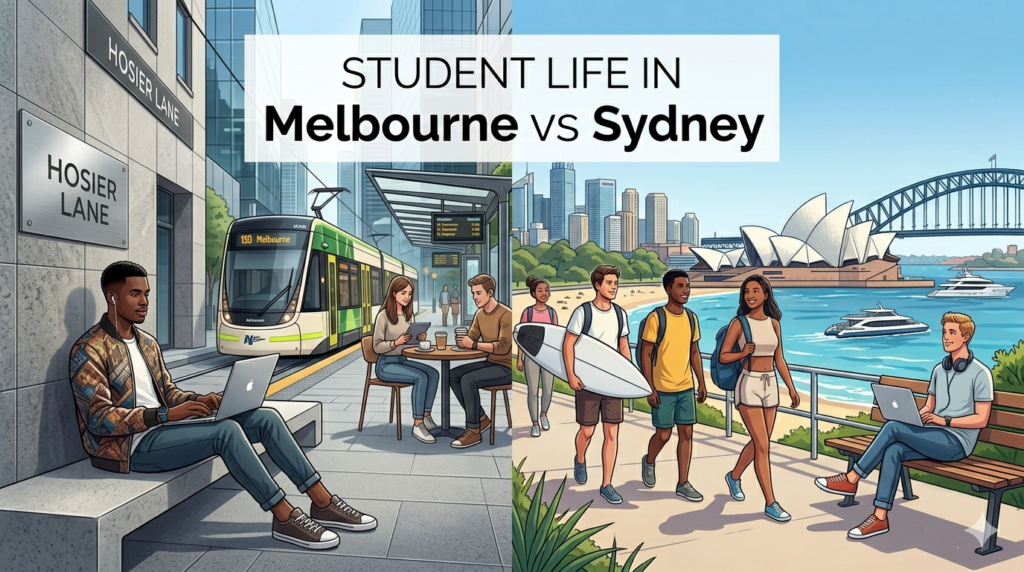
Student Life in Melbourne vs Sydney

Overview of Studying in Australia

Why Australia is a Top Destination

Australia has quietly become one of the most attractive places for international students, and once you look closer, it makes complete sense. The country offers a balance that many students dream of. You get world-class education, globally ranked universities, and a lifestyle that actually feels enjoyable instead of overwhelming. Cities like Melbourne and Sydney are not just study destinations; they are experiences in themselves.

One of the strongest reasons students choose Australia is the flexibility it offers. You can study, work part-time, and still have time to explore life outside the classroom. According to recent data, Australia hosts over 700,000 international students each year, showing just how trusted its education system has become globally. Universities focus heavily on practical learning, which means you are not just memorizing theory but actually preparing for real careers.

If you are planning your journey, resources like New Era Education can guide you through everything from course selection to visa processing. Many students underestimate how important proper guidance is, but it often makes the difference between a stressful and a smooth experience.

Beyond academics, Australia offers safety, diversity, and strong student support systems. You will find people from all over the world, which makes it easier to adapt and feel at home. English being the primary language also helps international students settle in faster compared to other countries.

What really stands out though is how each city offers a completely different vibe. This is where the Melbourne vs Sydney debate begins, and honestly, choosing between them is not as simple as it seems.

Role of Cities in Student Experience

The city you choose can shape your entire student journey more than the university itself. It influences your daily routine, your expenses, your social life, and even your career opportunities. Melbourne and Sydney may both be in Australia, but they feel like two different worlds when you actually live there.

Think about it this way. Your classroom might take up only a few hours of your day, but the rest of your time is spent exploring the city, commuting, working part time, and meeting people. That is why choosing the right city is just as important as choosing the right course.

Melbourne is often described as the cultural capital of Australia. It is known for its arts, coffee culture, and student friendly atmosphere. On the other hand, Sydney is more fast-paced, vibrant, and iconic with its beaches and skyline. Some students prefer the relaxed and creative vibe of Melbourne, while others are drawn to the energy and opportunities in Sydney.

Another factor is cost. Sydney is generally more expensive, especially when it comes to rent. Melbourne offers slightly more affordable options, which can make a big difference if you are managing a student budget. However, higher costs in Sydney sometimes come with higher earning opportunities as well.

If you are still unsure about where to start, you can explore study options through New Era’s study abroad guidance to better understand what suits your goals. The right choice depends on your personality, budget, and long term plans.

Choosing between Melbourne and Sydney is not about which city is better overall. It is about which one fits you better.


Melbourne vs Sydney at a Glance

Key Differences Table

When comparing Melbourne and Sydney, it helps to break things down into clear categories. Both cities offer excellent education and student experiences, but the differences can significantly affect your daily life.

FeatureMelbourneSydney
Cost of LivingModerateHigh
LifestyleCultural, relaxedFast paced, vibrant
WeatherUnpredictableSunny and stable
TransportExtensive tram networkStrong train and bus system
Job OpportunitiesGoodExcellent
Student PopulationVery highVery high
RentLower than SydneyHigher

Melbourne often feels more student focused. The city is designed in a way that makes it easy to navigate, especially with its famous tram network. Many universities are located close to the city center, which reduces commute time and cost.

Sydney, in contrast, feels more like a global business hub. It is bigger, busier, and offers more networking opportunities. If you are someone who thrives in a fast moving environment, Sydney might feel more exciting.

Cost is one of the biggest deciding factors. Rent in Sydney can be significantly higher, sometimes up to 30 percent more than Melbourne depending on the area. However, Sydney also offers higher wages for part time jobs, which can help balance things out.

The choice ultimately depends on what you value more. Do you want affordability and culture, or energy and opportunity?


Cost of Living Comparison

Accommodation Costs

Accommodation is usually the biggest expense for any student, and this is where the difference between Melbourne and Sydney becomes very clear. Sydney is known for its high rent, and this can be a challenge for students who are trying to manage a limited budget.

In Sydney, a shared apartment in the city can cost anywhere between AUD 250 to AUD 400 per week. If you want to live closer to major universities or the city center, the price can go even higher. Melbourne, on the other hand, offers more affordable options. You can find shared accommodation starting from around AUD 180 to AUD 300 per week.

This difference might not seem huge at first, but over a year, it adds up significantly. Students in Melbourne often find it easier to save money or spend on other experiences like travel or dining.

Another advantage of Melbourne is the availability of student housing. The city has a wide range of purpose built student accommodations, which are designed specifically for international students. These often include utilities, internet, and common areas, making life simpler.

If you are planning your budget, it is always a good idea to consult experts like New Era Education Nepal who can give you updated cost estimates and help you plan realistically.

Choosing the right accommodation is not just about cost. It also affects your comfort, safety, and overall experience. Some students prefer shared apartments for social interaction, while others prefer private studios for peace and focus.

Daily Expenses and Transport

Beyond rent, daily expenses play a big role in shaping your student life. This includes food, transport, entertainment, and basic necessities. Melbourne is generally considered more budget friendly in this aspect as well.

Groceries in both cities are fairly similar, but eating out in Sydney tends to be more expensive. A simple meal in Sydney can cost around AUD 15 to AUD 25, while in Melbourne you might find more affordable options, especially around university areas.

Transport is another important factor. Melbourne’s tram system is one of the most student friendly in the world. In fact, the central business district offers a free tram zone, which can save students a lot of money. Sydney relies more on trains and buses, which are efficient but can be slightly more expensive over time.

Students in both cities can access discounted transport cards, which help reduce costs. Still, Melbourne often comes out as the cheaper option overall.

Managing daily expenses requires planning. Cooking at home, using student discounts, and budgeting properly can make a big difference. Many students also take part time jobs to support themselves, which we will explore later.

Living smart is just as important as earning more. And this is where Melbourne often gives students a slight advantage.

Education and University Experience

Universities in Melbourne

Melbourne has built a strong reputation as one of the best student cities in the world, and a big reason behind that is the quality of its universities. Institutions like the University of Melbourne, Monash University, and RMIT University consistently rank among the top globally. These universities are known for their academic rigor, research opportunities, and industry connections, which help students transition smoothly into their careers.

One thing that stands out in Melbourne is how student focused the academic environment feels. Campuses are designed to encourage collaboration, creativity, and independent thinking. You will find modern libraries, innovation hubs, and student spaces that make studying less stressful and more engaging. Professors are approachable, and many courses include practical components like internships, projects, and real world case studies.

Melbourne is particularly strong in fields like business, arts, design, and information technology. If you are someone who values creativity and innovation, this city offers an environment where ideas are constantly flowing. The presence of a large international student community also means you get exposure to different perspectives, which enriches your learning experience.

Another advantage is accessibility. Many universities are located within or close to the city center, making commuting easier and less time consuming. This gives students more time to focus on studies or part time work.

If you are exploring your options, checking detailed course offerings through New Era Education can help you identify which Melbourne university aligns with your goals. The right university is not just about rankings, but about how well it supports your career path.

Melbourne’s education system feels balanced. It challenges you academically while also giving you room to grow personally, which is exactly what most students look for when studying abroad.

Universities in Sydney

Sydney is home to some of Australia’s most prestigious universities, including the University of Sydney, University of New South Wales, and University of Technology Sydney. These institutions are globally recognized and attract students from all over the world, making Sydney a highly competitive academic environment.

What makes Sydney unique is its strong connection to industry. Many universities here have partnerships with major companies, offering students access to internships, networking events, and job placements. If your goal is to build a career quickly after graduation, Sydney provides a clear advantage.

The academic environment in Sydney is fast paced and demanding. Students are expected to keep up with rigorous coursework while also taking advantage of extracurricular opportunities. This can feel intense at times, but it also prepares you for real world challenges.

Sydney is particularly known for programs in business, finance, engineering, and technology. Being a major financial hub, the city offers countless opportunities for students to gain hands on experience while studying. Many companies have headquarters here, which increases your chances of finding internships or part time jobs related to your field.

Campus life in Sydney is vibrant but slightly more spread out compared to Melbourne. Some universities are located further from the city center, which means commuting might take longer. However, the trade off is access to a broader professional network.

For students who are focused on career growth and global exposure, Sydney offers an environment that pushes you to perform at your best. With proper guidance from platforms like New Era Education, choosing the right university in Sydney becomes much easier and more strategic.


Lifestyle and Culture

Melbourne’s Cultural Scene

Melbourne feels like a city that lives and breathes creativity. From street art in hidden laneways to live music performances almost every night, there is always something happening. For students, this creates an environment that feels inspiring rather than overwhelming.

The city is often called Australia’s cultural capital, and once you experience it, the title makes sense. You can spend your weekends exploring art galleries, attending film festivals, or simply enjoying a quiet coffee in one of the many unique cafes. Melbourne’s coffee culture is famous worldwide, and it becomes part of your daily routine without even realizing it.

What makes Melbourne special for students is its inclusivity. No matter where you come from, you will find communities that make you feel at home. The city celebrates diversity through food, events, and cultural festivals. This helps international students adapt quickly and feel connected.

Another highlight is the balance between study and leisure. Melbourne does not feel rushed. You can focus on your studies during the week and still have plenty of options to relax and recharge. Parks, libraries, and public spaces are designed in a way that encourages a healthy lifestyle.

For students who enjoy a slower, more artistic way of living, Melbourne offers a perfect environment. It allows you to grow academically while also exploring your personal interests.

Sydney’s Lifestyle Appeal

Sydney offers a completely different kind of energy. It is vibrant, dynamic, and always moving. The city is famous for its iconic landmarks like the Sydney Opera House and Bondi Beach, and living here means these are part of your everyday life.

For students, Sydney feels exciting and full of opportunities. You can attend classes in the morning and relax at the beach in the afternoon. The outdoor lifestyle is a big part of what makes Sydney attractive. Activities like surfing, hiking, and coastal walks are easily accessible.

The social life in Sydney is also very active. There are countless events, concerts, and nightlife options that keep the city alive throughout the year. This makes it easy to meet new people and build connections.

However, this fast paced lifestyle can sometimes feel overwhelming, especially if you are trying to balance studies and work. Time management becomes crucial in Sydney.

The city is ideal for students who enjoy being in a lively environment and want to make the most of every moment. It pushes you to stay active, explore more, and step out of your comfort zone.

Both cities offer great lifestyles, but they cater to different personalities. Melbourne feels calm and creative, while Sydney feels energetic and ambitious.


Job Opportunities for Students

Part-time Work in Melbourne

Melbourne provides a wide range of part time job opportunities for students, especially in sectors like hospitality, retail, and customer service. Cafes, restaurants, and shops are always looking for staff, which makes it relatively easier for students to find work.

The city’s strong student population means employers are used to hiring international students and offering flexible schedules. This helps you manage your work alongside your studies without too much stress.

Average wages in Melbourne are decent, usually ranging from AUD 23 to AUD 30 per hour depending on the job. While it may not be as high as Sydney in some cases, the lower cost of living balances things out.

Another advantage is the work environment. Melbourne’s work culture is generally relaxed and supportive, which makes it easier for students to adapt. Many students find jobs within weeks of arriving, especially if they are proactive.

Working part time not only helps financially but also improves your communication skills and confidence. It gives you real world experience, which is valuable for your future career.

Part-time Work in Sydney

Sydney offers more job opportunities overall, mainly because it is a larger and more economically active city. Industries like finance, tourism, and corporate services create a high demand for part time workers.

Students in Sydney often have access to higher paying jobs compared to Melbourne. Wages can go up to AUD 35 per hour in certain roles, especially if you have prior experience or specialized skills.

The biggest advantage of working in Sydney is exposure. You are more likely to find roles that align with your field of study, which can give you a head start in your career. Networking opportunities are also stronger, which can open doors after graduation.

However, competition is higher. Since Sydney attracts students from all over the world, securing a job might take more effort initially. Persistence and a well prepared resume can make a big difference.

For career driven students, Sydney offers opportunities that go beyond just earning money. It allows you to build connections and gain experience that can shape your future.


Public Transport and Accessibility

Getting around the city is an important part of student life, and both Melbourne and Sydney offer reliable transport systems. Melbourne is famous for its tram network, which is not only extensive but also easy to use. The free tram zone in the city center is a major advantage for students.

Sydney relies more on trains, buses, and ferries. The system is efficient and well connected, but costs can add up over time. Students receive discounts, which helps reduce expenses.

Melbourne feels more compact and easier to navigate, while Sydney is larger and may require longer travel times. Your daily commute can impact your routine, so this is an important factor to consider.


Weather and Environment

Melbourne’s weather is often described as unpredictable. You might experience four seasons in a single day, which can be both exciting and challenging. Sydney, on the other hand, has a more stable and sunny climate.

If you enjoy warm weather and outdoor activities, Sydney might feel more comfortable. If you do not mind occasional changes and cooler temperatures, Melbourne works just fine.


Safety and Student Support

Both cities are considered safe for international students. Universities provide strong support services, including counseling, career guidance, and academic assistance.

Melbourne often ranks slightly higher in student friendly indexes, but Sydney also offers excellent safety and support systems. Choosing the right accommodation and staying aware of your surroundings ensures a safe experience in either city.


Which City is Better for You?

Choosing between Melbourne and Sydney depends on your priorities. If you prefer affordability, culture, and a relaxed lifestyle, Melbourne is a great choice. If you are looking for career opportunities, higher earnings, and a vibrant environment, Sydney might be better.

There is no one size fits all answer. Your decision should align with your goals, budget, and personality. Taking guidance from trusted platforms like New Era Education can help you make an informed choice.


Conclusion

Melbourne and Sydney both offer incredible student experiences, but in very different ways. Melbourne feels like a city that nurtures creativity and balance, while Sydney pushes you toward ambition and growth. Your choice should reflect what kind of journey you want to have during your study abroad experience.


FAQs

1. Which city is cheaper for students, Melbourne or Sydney?
Melbourne is generally more affordable, especially in terms of rent and daily expenses.

2. Is it easier to find a job in Sydney or Melbourne?
Sydney offers more opportunities, but Melbourne has less competition.

3. Which city has better universities?
Both cities have top ranked universities with global recognition.

4. Is Melbourne or Sydney better for international students?
It depends on your lifestyle preference and budget.

5. Can New Era Education help with studying in Australia?
Yes, visit https://newera.edu.np/ for expert guidance and support.

How to Write a GTE Statement for Australia

Understanding the GTE Requirement

What is a Genuine Temporary Entrant (GTE)?

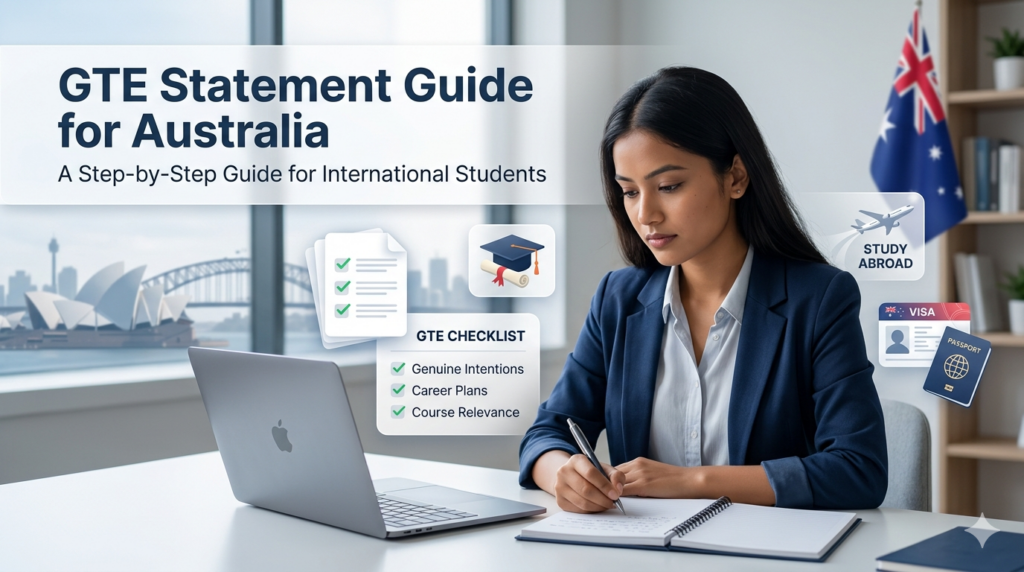
If you are planning to study in Australia, you will quickly come across something called the Genuine Temporary Entrant (GTE) statement. It might sound formal or even intimidating at first, but in reality, it is simply your chance to explain your story. Think of it as a personal narrative where you clearly show that your intention to study in Australia is genuine and temporary.

The Australian government introduced the GTE requirement to ensure that international students are coming to the country primarily for education, not for long-term migration without proper pathways. This means your statement needs to reflect honesty, clarity, and a strong connection between your past, present, and future goals.

A well-written GTE is not about using complex language. It is about making your intentions believable. Immigration officers are trained to spot vague or generic answers, so your statement needs to stand out as real and personal. You are essentially answering one big question: Why Australia, and why this course, at this point in your life?

Students often underestimate this document, thinking their academic scores alone will secure the visa. In reality, the GTE can make or break your application. A strong GTE complements your documents and adds a human element to your application.

If you want to explore more guidance on studying abroad, you can also check helpful resources at https://newera.edu.np/ where expert counselors regularly share insights for students.


Why the GTE Statement Matters for Visa Approval

The GTE statement is not just another document. It is one of the most critical parts of your Australian student visa application. Immigration officers rely on it to assess your credibility, your motivations, and whether your plans make sense.

Imagine reviewing hundreds of applications every day. What would stand out? Not just grades or certificates, but a clear, consistent story. That is exactly what your GTE needs to deliver. It should connect your academic history, your chosen course, and your career goals into one logical path.

Statistics show that a significant number of student visa refusals are linked to weak or unclear GTE statements. This often happens when students copy templates or fail to explain gaps in their education or work history. A generic statement signals a lack of authenticity, which raises red flags immediately.

Another important factor is consistency. Your GTE must align with the rest of your documents. If your financial records, academic background, and career goals do not match what you say in your statement, it weakens your case.

A strong GTE does three things effectively. It shows that you are a genuine student, it proves that your course choice is logical, and it reassures authorities that you plan to return home after completing your studies.

For more tips on visa preparation and documentation, you can explore https://newera.edu.np/blog, where detailed guides are regularly updated for students aiming to study abroad.


Key Elements of a Strong GTE Statement

Personal Background and Academic History

Your GTE statement should begin with a clear and honest overview of your personal background. This is where you introduce yourself beyond just your name and qualifications. Think about your upbringing, your education journey, and any experiences that shaped your decision to study further.

A strong academic history section does more than list degrees. It tells a story. For example, instead of simply stating that you completed high school, explain what subjects you enjoyed and how they influenced your career direction. Did you develop an interest in business, IT, or healthcare? That connection matters.

If you have any gaps in your education or work history, address them directly. Avoiding these gaps can make your application look suspicious. Instead, explain what you were doing during that time. Maybe you were working, preparing for exams, or dealing with personal matters. Honesty here builds trust.

You should also mention any relevant work experience. Even part time jobs or internships can strengthen your profile if they align with your chosen course. They show that you are serious about your field and have already taken steps toward your career.

This section is your foundation. It sets the tone for the rest of your statement. When written well, it gives the visa officer confidence that your application is genuine and thoughtfully prepared.


Reasons for Choosing Australia

Choosing Australia should never sound random in your GTE statement. You need to clearly explain why this country is the best fit for your education and career goals. Simply saying that Australia has good universities is not enough. You need to go deeper.

Australia is known for its globally recognized education system, practical learning approach, and multicultural environment. But how do these factors connect to you personally? That is the key question. Maybe your chosen course is more industry focused in Australia compared to your home country. Maybe the teaching methods align better with your learning style.

You can also mention factors like post study exposure, advanced facilities, and international recognition of Australian qualifications. According to recent education reports, Australia hosts over 700,000 international students, which reflects its strong reputation worldwide.

Another important aspect is comparing your options. Why not study in your home country or another country? A clear comparison shows that you have done your research and made an informed decision.

Keep your explanation realistic and specific. Avoid exaggerated claims or overly promotional language. Immigration officers are not looking for marketing content. They are looking for genuine reasoning.

For more insights on choosing the right study destination, you can visit https://newera.edu.np/ where expert advice is tailored for Nepali students planning to study abroad.


Course Selection Justification

Your course choice is the heart of your GTE statement. This is where many students struggle because they fail to connect their past education with their future goals. The course you choose should make sense based on your academic background or work experience.

Start by explaining what the course is about and why it interests you. Then connect it to your previous studies. For example, if you studied management and now want to pursue a Master in Business Analytics, explain how your background supports this transition.

It is also important to show how this course will help you achieve your career goals. What skills will you gain? How will these skills benefit you when you return to your home country? Be specific here.

Avoid choosing a course that seems unrelated without proper justification. If you are changing fields, provide a strong explanation. Maybe you discovered a new interest through work experience or personal projects.

This section should clearly answer one question: Why this course, and why now? When your answer is logical and well explained, it strengthens your entire application.


Future Career Plans

Your future plans play a major role in convincing visa officers that you are a genuine temporary entrant. You need to show that your education in Australia is part of a bigger plan that continues in your home country.

Start by describing your short term goals after graduation. What kind of job do you want? In which industry? Then move to your long term plans. Do you want to start your own business, take on leadership roles, or contribute to a specific sector?

Make sure your plans are realistic and aligned with your chosen course. Avoid vague statements like “I want to be successful.” Instead, provide clear and measurable goals.

You can also mention opportunities in your home country. For example, if your country has growing demand in your field, highlight that. This strengthens your case by showing strong ties to your home country.

A well defined career plan not only improves your GTE but also gives you clarity about your future. It shows that you are not just studying for the sake of going abroad, but with a clear purpose in mind.

Structuring Your GTE Statement

Introduction Paragraph Tips

Your introduction is your first impression, and it sets the tone for everything that follows. A strong opening paragraph should be clear, direct, and personal. You do not need to overcomplicate it with fancy language. Instead, focus on briefly introducing who you are, what you are applying for, and your main intention behind studying in Australia.

Think of your introduction as a snapshot of your entire story. In just a few sentences, the visa officer should understand your academic background and your purpose. For example, you might mention your most recent qualification, your chosen course in Australia, and a short line about your career goal. This immediately creates context and keeps the reader engaged.

Avoid starting with generic phrases like “I am writing this statement to apply for a visa.” That sounds robotic and overused. Instead, make it natural and conversational. Imagine you are explaining your journey to someone who genuinely wants to understand your plans.

Another important tip is to keep your introduction aligned with the rest of your statement. If your opening sounds strong but the rest of the document lacks clarity, it creates inconsistency. Your introduction should act as a promise that your body paragraphs will fulfill.

A well written introduction builds confidence. It shows that you know what you want and that you are serious about your plans. This is exactly the kind of tone that immigration officers look for when reviewing GTE statements.


Body Paragraph Development

The body of your GTE statement is where your story truly unfolds. This is where you connect all the dots between your past, present, and future. Each paragraph should have a clear purpose, and together they should form a logical flow that is easy to follow.

Start by expanding on your academic background and work experience. Then move into your reasons for choosing Australia and your specific course. Finally, explain your future career plans in detail. Each section should smoothly transition into the next, creating a natural progression of ideas.

One effective way to develop strong body paragraphs is by using real examples. Instead of saying you are passionate about a field, explain how that passion developed. Maybe it started during a school project, an internship, or a job experience. These details make your statement more believable and engaging.

Clarity is key here. Avoid long, confusing sentences or unnecessary repetition. Each paragraph should focus on one main idea and support it with relevant details. If your writing feels scattered, it becomes difficult for the visa officer to understand your intentions.

Also, make sure your tone remains consistent throughout. Do not switch between overly formal and casual language. Keep it natural, honest, and professional.

When done right, your body paragraphs create a compelling narrative that answers every question an immigration officer might have. It leaves no room for doubt about your intentions.


Conclusion That Reinforces Intentions

Your conclusion is your final chance to leave a strong impression. It should not introduce new information but instead reinforce everything you have already explained. Think of it as a summary that ties your entire statement together.

In your conclusion, briefly restate your purpose for studying in Australia and your commitment to returning to your home country after completing your studies. This is crucial because the GTE requirement focuses heavily on your temporary intent.

Keep your closing simple and confident. Avoid sounding uncertain or overly emotional. You want to leave the reader with a clear sense that you are focused, prepared, and genuine.

A good conclusion also reflects consistency. It should align perfectly with your introduction and body paragraphs. If your entire statement has been logical and well structured, your conclusion will feel natural and complete.

Many students rush this part, but it deserves attention. A strong ending can reinforce trust and leave a lasting positive impression on the visa officer reviewing your application.


Common Mistakes to Avoid in GTE Writing

Generic Statements

One of the biggest mistakes students make is relying on generic content. If your GTE statement sounds like something that could apply to anyone, it loses its impact immediately. Immigration officers read thousands of statements, so they can easily spot copied or template based content.

Generic statements often include phrases like “Australia has a high quality education system” without any personal connection. While this may be true, it does not explain why it matters to you specifically. Your statement should reflect your unique journey, not a general opinion.

To avoid this, focus on personalization. Talk about your experiences, your decisions, and your goals. Even small details can make a big difference. For example, mentioning a specific subject you enjoyed or a project you worked on adds authenticity.

Another issue with generic writing is that it feels disconnected. It does not create a clear link between your past and your future. This weakens your overall application and raises doubts about your intentions.

If you want your GTE to stand out, make it personal. Write it in a way that only you could. That is what makes it believable and effective.


Inconsistent Information

Consistency is critical in your GTE statement. If there are contradictions between your statement and your supporting documents, it creates immediate concern. Even small inconsistencies can lead to doubts about your credibility.

For example, if your academic records show one thing but your GTE tells a different story, it raises red flags. The same applies to your work experience, financial details, and future plans. Everything must align perfectly.

This is why it is important to review your entire application before submission. Make sure your dates, qualifications, and experiences match across all documents. If there are any differences, explain them clearly in your GTE.

Inconsistency often happens when students rush their statements or copy information from different sources without checking accuracy. Taking the time to review and edit your content can prevent these issues.

A consistent application builds trust. It shows that you are organized, honest, and serious about your plans. These are exactly the qualities immigration officers look for.


Lack of Career Clarity

Another common mistake is failing to clearly define your career goals. If your future plans are vague or unrealistic, it weakens your entire GTE statement. Immigration officers want to see that you have a clear direction and that your chosen course supports that direction.

Saying that you want to “build a successful career” is not enough. What kind of career? In which industry? In which role? These details matter. They show that you have thought carefully about your future.

A lack of clarity also makes your course choice seem random. If your goals are not well defined, it becomes difficult to justify why you chose a specific program in Australia.

To fix this, spend time researching your field. Understand the job market in your home country and identify opportunities that align with your skills. Then connect those opportunities to your course.

Clear career goals strengthen your GTE by showing purpose and direction. They make your application more convincing and easier to understand.


Expert Tips to Strengthen Your GTE

Use Evidence and Supporting Documents

A strong GTE statement is not just about words. It should be supported by solid evidence. This includes your academic transcripts, work experience letters, financial documents, and any other relevant proof.

When you mention something in your statement, make sure there is a document to back it up. For example, if you talk about your work experience, include an official letter from your employer. This adds credibility and strengthens your application.

Evidence also helps clarify your story. It provides context and supports your claims, making your statement more convincing. Without proper documentation, even a well written GTE can lose its impact.

Think of your GTE as the explanation and your documents as the proof. Together, they create a complete and reliable application.


Maintain Authenticity and Honesty

Authenticity is one of the most important factors in a successful GTE statement. Immigration officers are trained to detect exaggeration and false information. If your statement feels forced or unrealistic, it can harm your application.

Be honest about your journey, including any challenges or gaps. You do not need to present a perfect story. What matters is that your story is real and makes sense.

Writing in your own voice also helps. Avoid copying templates or using overly complex language. Keep your tone natural and conversational, as if you are explaining your plans to someone you trust.

Honesty builds trust, and trust is essential in the visa approval process. When your statement feels genuine, it becomes much more powerful.


Sample GTE Statement Breakdown

Real Example Analysis

Let’s break down what a strong GTE statement looks like in practice. Imagine a student who completed a Bachelor’s degree in Information Technology and is applying for a Master’s program in Australia.

The statement begins with a clear introduction that outlines the student’s background and purpose. It then moves into a detailed explanation of their academic journey, highlighting key subjects and projects that sparked their interest in IT.

Next, the student explains why Australia is the preferred destination. They mention specific universities, course structures, and practical learning opportunities that align with their goals. This shows research and genuine interest.

The course selection is justified by connecting it to both past studies and future plans. The student clearly explains how the program will help them gain advanced skills needed in their home country.

Finally, the statement outlines realistic career goals, including specific roles and industries. It emphasizes the intention to return home and apply the knowledge gained.

This kind of structured, detailed, and honest approach is what makes a GTE statement effective.


How New Era Education Helps You Prepare GTE

Writing a GTE statement can feel overwhelming, especially if you are doing it for the first time. This is where expert guidance can make a big difference. At https://newera.edu.np/, students receive personalized support to craft strong and effective GTE statements.

Experienced counselors help you identify your strengths, clarify your goals, and structure your statement properly. They also review your content to ensure it is clear, consistent, and aligned with visa requirements.

In addition to GTE preparation, New Era Education provides support for university selection, visa processing, and overall study abroad planning. Their guidance helps students avoid common mistakes and improve their chances of visa approval.

If you are serious about studying in Australia, getting professional help can save you time and increase your confidence throughout the application process.


Conclusion

Writing a strong GTE statement for Australia is not about using complicated words or copying templates. It is about telling your story in a clear, honest, and logical way. Every part of your statement should connect your past experiences with your future goals.

When you focus on authenticity, structure, and clarity, your GTE becomes more than just a requirement. It becomes a powerful tool that supports your entire visa application. Take your time, review your content carefully, and make sure every detail aligns with your documents.

With the right approach and proper guidance, you can create a GTE statement that truly reflects your intentions and increases your chances of studying in Australia.


FAQs

1. What is the ideal length of a GTE statement?

A GTE statement is usually between 500 to 1000 words, depending on your background and the complexity of your case.

2. Can I use a sample GTE statement?

You can refer to samples for structure, but avoid copying them. Your statement must be unique and personal.

3. Is GTE still required for Australia student visas?

Policies can change, so always check the latest visa requirements or consult experts like New Era Education.

4. How long does it take to write a GTE statement?

It typically takes a few days to a week, including drafting, reviewing, and editing.

5. Can professionals help with GTE writing?

Yes, experts can guide you, review your content, and help you avoid common mistakes.

Australia Health Insurance Requirements for Students – Complete Guide for International Students

Studying in Australia is a dream for thousands of international students every year. With globally ranked universities, a diverse culture, and strong career opportunities, Australia has become one of the most attractive destinations for higher education. However, before packing your bags and boarding your flight, there is one crucial requirement every international student must fulfill: health insurance.

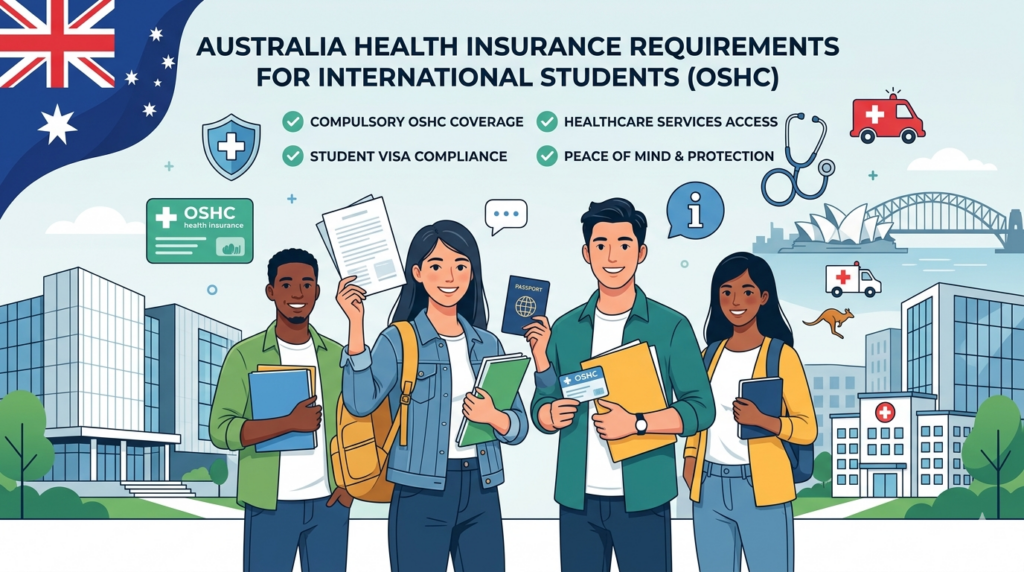
Australia has a well-structured healthcare system, but it can be expensive for non-residents. A single hospital visit or emergency treatment could cost hundreds or even thousands of dollars without insurance. To ensure students are protected financially and medically during their studies, the Australian government requires international students to obtain Overseas Student Health Cover (OSHC).

This insurance acts as a safety net. Imagine moving to a new country and suddenly falling sick without medical coverage. The cost alone could disrupt your studies and finances. That’s exactly why the government has made OSHC mandatory for student visa holders. It ensures that students can access doctors, hospitals, and essential treatments while staying compliant with visa conditions.

For students from Nepal planning to study abroad, understanding the health insurance requirement is an essential step in the application journey. Many students start their research through trusted education resources such as New Era Education, which provides guidance on university admissions, visa documentation, and study-abroad preparation.

This comprehensive guide explains everything you need to know about Australia health insurance requirements for students, including OSHC coverage, costs, visa rules, and how to arrange insurance before arriving in Australia. By the end of this article, you will clearly understand how to stay compliant with immigration regulations while protecting your health and finances during your academic journey.


Understanding Overseas Student Health Cover (OSHC)

Moving to a new country involves more than choosing a university or booking flights. One of the most important yet often overlooked aspects of studying abroad is healthcare protection. Australia requires international students to obtain a specific type of insurance known as Overseas Student Health Cover (OSHC). This policy ensures that students have access to medical services without facing overwhelming financial burdens.

Healthcare in Australia is high quality but expensive for people who are not permanent residents. A simple general practitioner (GP) visit may cost between AUD 70 and AUD 120 without insurance, while hospital treatment could reach thousands of dollars depending on the procedure. OSHC helps cover many of these costs, making healthcare affordable for students during their stay.

OSHC is not just recommended—it is legally required for most international students applying for an Australian student visa. Immigration authorities require proof that the student has arranged valid health insurance for the entire duration of their stay. Without this, the visa application may be refused.

The purpose of OSHC goes beyond financial protection. It also helps students integrate into Australia’s healthcare system smoothly. With the right insurance plan, students can visit doctors, access hospital care, and receive medications when necessary. This means they can focus on their studies rather than worrying about unexpected medical bills.

For many Nepali students preparing to study abroad, understanding OSHC becomes part of the visa preparation process. Education consultants and resources such as the New Era Education Blog often guide students through insurance requirements alongside university applications and visa documentation.

Another advantage of OSHC is that it allows students to maintain their well-being while adapting to a new environment. International students often experience lifestyle changes, climate differences, and academic pressure. Having reliable medical coverage provides peace of mind and ensures that help is available when needed.

In short, OSHC functions as both a legal requirement and a practical safety measure. It ensures students remain healthy, protected, and financially secure throughout their study journey in Australia. Understanding how this insurance works is the first step toward fulfilling Australia’s health insurance requirements.


What Is Overseas Student Health Cover (OSHC)?

Overseas Student Health Cover (OSHC) is a type of health insurance specifically designed for international students studying in Australia. It is approved by the Australian government and offered by selected private insurance providers. The main goal of OSHC is to help international students pay for medical and hospital care while living in Australia.

Think of OSHC as a bridge between international students and Australia’s healthcare system. Australian citizens and permanent residents use a public healthcare program called Medicare, but most international students are not eligible for it. Instead, they must rely on OSHC to access similar healthcare services.

The insurance typically covers a wide range of essential medical services, including doctor consultations, hospital treatment, ambulance services, and limited prescription medications. These benefits ensure that students receive necessary medical care without facing the full cost of treatment.

Several Australian insurance companies are authorized to provide OSHC. Some of the most recognized providers include:

  • Bupa Australia
  • Medibank
  • Allianz Care Australia
  • nib OSHC
  • CBHS International Health

Although these companies offer similar basic coverage, their pricing, additional benefits, and claim processes may vary. Students can choose the provider that best fits their budget and healthcare needs.

OSHC policies are usually purchased for the entire duration of the student visa. For example, if a student plans to study a three-year bachelor’s degree, they must obtain insurance that covers the full three-year period. This requirement ensures there are no gaps in health coverage during their stay.

Another important aspect of OSHC is that it can also include family members. If a student travels to Australia with a spouse or children, they must purchase a family OSHC plan to cover all dependents.

For Nepali students planning their Australian education journey, understanding OSHC early can make the visa process smoother. Many students rely on experienced study-abroad advisors such as New Era Education to help them arrange OSHC alongside university admissions and visa documentation.

In simple terms, OSHC is more than just insurance—it is a requirement that protects students from unexpected healthcare costs while helping them comply with Australian immigration regulations. Without it, studying in Australia simply isn’t possible.


Why OSHC Is Mandatory for International Students

Australia is known for having one of the most advanced healthcare systems in the world. Hospitals are well equipped, doctors are highly trained, and medical facilities maintain strict quality standards. However, high-quality healthcare often comes with high costs. Without insurance, even routine medical services can become financially overwhelming for international students.

To address this issue, the Australian government made Overseas Student Health Cover (OSHC) mandatory for most international students. This rule ensures that students can access healthcare services while protecting the national healthcare system from unpaid medical expenses.

The requirement is directly connected to the Student Visa Subclass 500. According to the Department of Home Affairs, students must maintain valid OSHC for the entire duration of their stay in Australia. If the insurance expires or becomes invalid, it may lead to visa complications or even cancellation.

There are several reasons why the government enforces this rule:

First, it ensures financial protection for students. Medical emergencies can occur at any time—an accident, sudden illness, or unexpected infection. With OSHC, students are protected from paying the full cost of treatment.

Second, it reduces pressure on Australia’s public healthcare system. Since international students do not pay the same taxes as citizens, OSHC ensures they contribute to their own healthcare expenses.

Third, it promotes student well-being and academic success. A healthy student is more likely to perform well academically. When medical support is easily accessible, students can focus on their education rather than worrying about healthcare costs.

Another important aspect is compliance with immigration policies. During the visa application process, students must submit proof that they have purchased OSHC. Immigration officers verify this documentation before approving the visa.

For students from Nepal exploring study opportunities abroad, professional guidance can make this process easier. Education consultancies such as New Era Education frequently help students understand visa conditions, including health insurance requirements, admission procedures, and travel preparation.

OSHC also creates a sense of security for families sending their children overseas. Parents know that if their child falls sick or requires medical attention, they will have access to professional healthcare services.

The bottom line is clear: OSHC is not optional. It is a legal requirement, a financial safeguard, and a support system that helps international students live safely and confidently while studying in Australia.

Who Must Purchase OSHC in Australia

When planning to study in Australia, many international students assume health insurance might be optional or only required in certain cases. In reality, Overseas Student Health Cover (OSHC) is mandatory for almost all international students who intend to study in Australia under a student visa. The Australian government has implemented strict rules to ensure every eligible student maintains adequate healthcare coverage throughout their stay. This requirement protects both students and the healthcare system, ensuring that medical expenses do not become an overwhelming burden.

Primarily, all international students applying for the Student Visa (Subclass 500) must purchase OSHC before their visa can be approved. Immigration authorities require proof that the insurance policy will remain active for the entire duration of the student’s stay in Australia. Without this documentation, the visa application will generally not move forward. This means health insurance is not something you arrange after arriving in Australia—it must be organized before the visa approval stage.

The requirement also extends beyond the student themselves. If a student plans to bring family members, such as a spouse or children, those dependents must also be covered under an OSHC policy. In these cases, the student must purchase a family OSHC plan instead of a single policy. Family policies ensure that every member traveling with the student has access to healthcare services if needed.

There are a few rare situations where OSHC may not be required. Students from certain countries that have reciprocal healthcare agreements with Australia, such as the United Kingdom, Sweden, Norway, Belgium, the Netherlands, Finland, Italy, Malta, and Slovenia, may be eligible for limited access to Medicare. However, even in these cases, many students still purchase additional health insurance to ensure broader coverage.

For most students from countries like Nepal, India, Bangladesh, and many parts of Asia and Africa, OSHC is absolutely mandatory. Students cannot bypass this requirement because it is directly linked to immigration regulations.

Many students preparing for Australian education often learn about these requirements through reliable education guidance platforms. For instance, those planning their study journey frequently explore resources like https://newera.edu.np/blog/ where topics such as visa documentation, university selection, and health insurance requirements are explained in detail.

Understanding who needs OSHC is crucial because failing to maintain valid coverage can lead to serious consequences. If a student’s insurance expires while they are still studying in Australia, it may violate visa conditions. In such cases, students must renew or extend their coverage immediately to remain compliant with immigration rules.

Ultimately, every international student should treat OSHC as a fundamental part of their study-abroad preparation, just like university admission letters, visa applications, and travel arrangements. Ensuring the right coverage early can prevent complications later and allow students to focus fully on their academic experience in Australia.


OSHC Requirements for Australian Student Visa

Health insurance is closely tied to Australia’s immigration system, particularly for international students. When applying for an Australian student visa, one of the key conditions applicants must meet is maintaining valid health insurance through Overseas Student Health Cover (OSHC). This requirement ensures that students are financially prepared to handle healthcare costs while studying in the country.

The Australian government takes this requirement seriously. During the student visa application process, applicants must provide evidence that they have purchased OSHC from an approved provider. The insurance must begin either from the date the student arrives in Australia or from the start date required by the visa conditions. Immigration officers carefully review this documentation to ensure that students are fully covered.

Another important rule is that OSHC must remain active for the entire duration of the student visa. If a student’s course lasts three years, the insurance policy must cover that full period. If the student later extends their course or enrolls in another program, they must also extend their OSHC accordingly.

Students should also understand that OSHC cannot be replaced by standard travel insurance. Travel insurance typically covers short-term travel issues such as lost luggage or flight cancellations. OSHC, on the other hand, is specifically designed to meet the healthcare requirements of international students living in Australia for extended periods.

Because visa conditions can sometimes feel complex, many students seek professional guidance when preparing their application. Education consultancies such as https://newera.edu.np/ assist students with university admissions, visa preparation, and health insurance documentation, ensuring everything aligns with Australian immigration rules.

Maintaining valid OSHC throughout the visa period is not just a formality—it is a legal responsibility. If the insurance lapses or becomes invalid, students may be considered in breach of their visa conditions. This could potentially lead to visa cancellation or other immigration issues.

For this reason, students should always keep track of their insurance validity and renew it before it expires. Many OSHC providers offer online portals where students can check policy details, renew coverage, and submit medical claims easily.

Understanding these visa-related insurance requirements helps students avoid unnecessary complications. By arranging OSHC correctly and maintaining continuous coverage, international students can ensure their stay in Australia remains both legally compliant and medically secure.


Student Visa Subclass 500 Health Insurance Rules

The Student Visa Subclass 500 is the primary visa category for international students who want to study in Australia. This visa allows students to enroll in full-time courses at recognized educational institutions, work limited hours during study periods, and stay in Australia for the duration of their program. However, one of the non-negotiable conditions attached to this visa is maintaining valid health insurance through Overseas Student Health Cover (OSHC).

The Australian Department of Home Affairs clearly states that every Subclass 500 visa holder must have OSHC for the entire duration of their stay. This rule ensures that international students can access healthcare services without relying on Australia’s public healthcare funding. Since students on this visa are considered temporary residents, they must have private insurance specifically designed for international students.

There are several important rules associated with OSHC under the Subclass 500 visa. First, students must purchase insurance from a government-approved provider before submitting their visa application. Approved providers include well-known companies such as Allianz Care, Bupa, Medibank, nib, and CBHS International Health.

Second, the insurance must cover the student from the moment they arrive in Australia until the day they leave the country or their visa expires. If there are any gaps in coverage, immigration authorities may consider it a violation of visa conditions.

Third, students must maintain continuous coverage. If a student changes courses, transfers universities, or extends their stay for further studies, they must update their OSHC policy accordingly.

Education consultants and student advisors often help applicants understand these requirements during the visa preparation stage. Platforms like New Era Education provide detailed resources for students planning to study abroad, including guidance on visa rules, admission processes, and health insurance arrangements.

Another important rule is that OSHC must meet minimum coverage standards set by the Australian government. This ensures that students receive access to essential healthcare services such as doctor visits, hospital treatment, and certain medications.

Students who fail to maintain OSHC may face serious consequences, including visa cancellation. Therefore, it is essential to treat this insurance as a critical part of maintaining legal status in Australia.

Understanding the health insurance rules under the Student Visa Subclass 500 helps students avoid unexpected issues during their studies. When students plan their insurance correctly from the beginning, they can focus on what truly matters—their education, personal growth, and life experience in Australia.


Required Duration of Health Insurance Coverage

One of the most important aspects of Australia’s health insurance requirement for students is the duration of coverage. The Australian government requires international students to maintain Overseas Student Health Cover (OSHC) for the entire period of their stay under the student visa. This means the insurance must remain valid from the moment the student arrives in Australia until the day their visa expires or they leave the country.

Many students initially misunderstand this requirement. Some believe that purchasing insurance for the duration of their course alone is enough. However, Australian immigration rules usually require coverage for the full visa length, which often includes additional weeks or months beyond the course end date. These extra weeks allow students time to prepare for departure or transition to another visa if needed.

For example, if a student enrolls in a two-year master’s program, their visa might extend slightly beyond the official course completion date. In such cases, the OSHC policy must also extend for that entire visa period. If the coverage ends earlier, the student will need to renew the insurance to remain compliant with visa conditions.

Students who extend their studies must also extend their OSHC. This commonly happens when students:

  • Enroll in another academic program
  • Transfer to a different institution
  • Extend their visa for research or academic purposes

Failing to update the insurance coverage in these situations can create complications with immigration authorities.

Most OSHC providers offer flexible renewal options. Students can easily extend their policy online or through their insurance provider’s customer support service. Universities often remind students to maintain valid health insurance as well, since it is part of the enrollment compliance process.

For international students planning their Australian education journey, it is always wise to arrange OSHC carefully from the beginning. Study-abroad advisors such as https://newera.edu.np/ often help students calculate the correct coverage duration when preparing visa documentation.

Maintaining the right coverage duration ensures that students remain legally compliant and financially protected throughout their stay. It also provides peace of mind, knowing that medical support will always be available if needed during their academic journey in Australia.

Proof of OSHC During Visa Application

When applying for an Australian student visa, submitting proof of Overseas Student Health Cover (OSHC) is a critical step that cannot be skipped. Immigration authorities require concrete evidence that the applicant has purchased a valid OSHC policy from an approved provider before the visa can be granted. This requirement exists to ensure that international students will not face financial hardship due to medical expenses while studying in Australia.

Proof of OSHC usually comes in the form of a policy certificate or confirmation letter issued by the insurance provider. This document contains several important details, including the student’s name, the policy number, the insurance provider, the start and end date of the coverage, and the type of OSHC plan purchased. When submitting a visa application through the Australian immigration portal, students must upload this document as part of their supporting evidence.

In many cases, universities and education consultants assist students in arranging OSHC before the visa application is submitted. For example, students working with professional guidance platforms such as https://newera.edu.np/ often receive support in purchasing OSHC from approved providers and ensuring that all documentation is correctly prepared for visa submission. This assistance can reduce errors and improve the chances of a smooth visa approval process.

Another important point is that the insurance policy must align with the duration of the student’s visa. If the coverage period is shorter than the visa duration, immigration authorities may request additional documentation or require the student to extend their insurance policy before approving the visa.

Students should also keep a digital and printed copy of their OSHC certificate. Immigration officials may request this document when the student arrives in Australia at the airport. Additionally, universities sometimes ask for proof of insurance during enrollment or orientation.

The Australian Department of Home Affairs uses this proof to verify that students meet the health insurance condition attached to the Student Visa Subclass 500. Without valid documentation, the visa application could be delayed or even refused.

Because this step is closely linked to visa approval, students should double-check their policy details before submission. The name on the insurance certificate must exactly match the name on the passport, and the coverage dates must be accurate.

Providing clear proof of OSHC demonstrates that the student understands and complies with Australian immigration requirements. It also reassures authorities that the student is financially prepared to manage healthcare needs during their stay in Australia.


What OSHC Covers for International Students

Understanding what Overseas Student Health Cover (OSHC) actually includes is just as important as knowing that it is mandatory. While OSHC provides valuable medical coverage, it does not cover every possible healthcare expense. Instead, it focuses on essential medical services that international students may need during their time in Australia.

The primary purpose of OSHC is to help students access healthcare services similar to those available under Australia’s public healthcare system, Medicare. However, since international students are generally not eligible for Medicare, OSHC acts as their main form of medical protection.

Most standard OSHC policies cover three major areas: doctor consultations, hospital treatment, and certain prescription medications. These services ensure that students can receive professional medical care without paying the full cost out of pocket.

Doctor visits, often called GP consultations, are one of the most common medical services covered by OSHC. Students can visit a general practitioner if they feel sick, have minor injuries, or require medical advice. Depending on the provider and clinic, some visits may be fully covered, while others may require a small out-of-pocket payment known as a “gap fee.”

Hospital treatment is another major benefit of OSHC. If a student needs surgery, emergency treatment, or specialized medical care, the insurance can help cover part or all of the hospital expenses. Considering that hospital stays in Australia can cost thousands of dollars, this coverage is extremely important.

OSHC also includes limited pharmaceutical benefits. If a doctor prescribes medication, the insurance can reimburse part of the cost, reducing the amount the student needs to pay at the pharmacy.

Many OSHC providers also include ambulance coverage, which is crucial because ambulance services in Australia can be very expensive. In some states, ambulance transport can cost hundreds or even thousands of dollars depending on the distance and medical care required during the trip.

Despite these benefits, OSHC has limitations. It may not cover certain services such as dental care, physiotherapy, eye exams, or cosmetic procedures unless students purchase additional coverage. Understanding these limitations helps students avoid unexpected expenses.

For students preparing to study abroad, research and proper planning are essential. Many aspiring international students gather information through educational resources like the New Era Education Blog, where topics related to studying in Australia—such as visa requirements, living expenses, and insurance policies—are regularly discussed.

Ultimately, OSHC provides a reliable safety net. It ensures that international students can receive medical treatment when needed without facing overwhelming healthcare costs during their academic journey in Australia.


Doctor Visits and Medical Services

One of the most important benefits of Overseas Student Health Cover (OSHC) is access to doctor visits and general medical services. When international students move to Australia, they may experience new climates, unfamiliar food, and lifestyle changes. These adjustments can sometimes lead to minor health issues such as colds, allergies, infections, or stress-related conditions. Having access to a doctor ensures students can quickly address these problems before they become serious.

In Australia, the first point of medical contact is usually a General Practitioner (GP). A GP is a trained medical doctor who diagnoses common illnesses, provides treatment, and refers patients to specialists if necessary. OSHC helps cover the cost of GP consultations, making it easier for international students to receive professional medical advice.

Typically, a GP visit in Australia may cost between AUD 70 and AUD 120 without insurance. With OSHC, students can claim a significant portion of this fee. Some medical clinics even offer bulk billing, which means the insurance provider pays the full consultation cost and the student does not have to pay anything out of pocket.

Doctor visits covered under OSHC may include:

  • Diagnosis and treatment of common illnesses
  • Medical advice and health assessments
  • Referrals to medical specialists
  • Basic medical procedures

If a GP determines that a student requires specialized treatment, they may refer the student to a specialist doctor such as a dermatologist, cardiologist, or orthopedic surgeon. OSHC can help cover part of these consultation costs, although students may still need to pay a portion depending on the specialist and treatment type.

Another advantage of having access to regular medical services is preventive care. Students can seek medical advice early, which often prevents minor health problems from becoming major issues. This proactive approach is especially valuable for students who are adjusting to a new environment far from home.

Education consultancies that guide students through the study-abroad process often emphasize the importance of understanding healthcare systems before departure. Many students exploring Australian education opportunities through https://newera.edu.np/ receive guidance not only on admissions and visas but also on essential matters like health insurance and accessing medical services abroad.

Doctor visits are one of the most frequently used benefits of OSHC, making this coverage an essential component of student life in Australia. By ensuring affordable access to healthcare professionals, OSHC helps international students maintain their health, stay focused on their studies, and fully enjoy their educational experience abroad.


Prescription Medicines and Pharmacy Benefits

Healthcare often involves more than just visiting a doctor. In many cases, treatment requires prescription medicines, which can add to the overall cost of healthcare. Fortunately, Overseas Student Health Cover (OSHC) includes partial coverage for certain prescription medications, helping international students manage these expenses more easily while studying in Australia.

When a student visits a doctor and receives a prescription, they can take it to a registered pharmacy to obtain the recommended medication. In Australia, pharmacies are widely available and professionally regulated to ensure safe and accurate distribution of medicines. However, prescription medications can sometimes be expensive, especially for specialized treatments.

OSHC helps reduce these costs by offering pharmaceutical benefits. While the insurance may not cover the entire price of every medication, it typically reimburses a portion of the cost up to a specified annual limit. The exact amount varies depending on the insurance provider and policy plan.

For example, if a medication costs AUD 50, the insurance policy may reimburse a significant portion of that amount after the student submits a claim. This system helps make essential treatments more affordable for international students who may already be managing tuition fees, accommodation costs, and other living expenses.

Common medications covered under OSHC include treatments for:

  • Infections such as antibiotics
  • Pain relief medications
  • Allergy treatments
  • Certain chronic condition medications

However, there are some limitations. Over-the-counter medicines—such as vitamins, supplements, or non-prescription painkillers—are generally not covered by OSHC. The medication must usually be prescribed by a registered doctor to qualify for reimbursement.

Students should also keep the pharmacy receipt and prescription documentation when purchasing medications. These documents are required when submitting a claim to the insurance provider.

Many OSHC providers offer online or mobile claim systems, allowing students to upload receipts and receive reimbursements quickly. This convenient process helps ensure that students can focus on their studies rather than worrying about complicated insurance procedures.

For students preparing to study in Australia, understanding these healthcare benefits in advance can make the transition smoother. Educational guidance platforms like New Era Education often provide helpful insights about living expenses, healthcare systems, and student support services for those planning to study abroad.

Prescription medicine coverage is an essential component of OSHC. It ensures that international students can access necessary treatments when illness occurs, reducing financial stress and helping them maintain their health during their academic journey in Australia.

Ambulance and Hospital Treatment

Medical emergencies can happen unexpectedly, even to healthy students. Accidents, sudden illnesses, or severe health complications may require immediate hospitalization or emergency transportation. In Australia, these services are highly professional and reliable, but they can also be extremely expensive. This is why Overseas Student Health Cover (OSHC) includes important coverage for ambulance services and hospital treatment, ensuring international students are protected during serious medical situations.

Ambulance services in Australia are not automatically free for international visitors. Depending on the state and distance traveled, an ambulance ride can cost between AUD 400 and AUD 2,000 or even more. Without insurance, this expense can be shocking for students who may already be managing tight budgets while studying abroad. OSHC policies typically cover emergency ambulance transportation, allowing students to receive urgent care without worrying about the immediate cost.

Hospital treatment is another critical area covered by OSHC. If a student requires admission to a hospital due to illness, injury, or surgery, the insurance can cover many of the associated costs. Hospital care in Australia includes services such as doctor consultations, surgical procedures, nursing care, and accommodation in a hospital ward. Without insurance, hospital stays can cost thousands of dollars depending on the complexity of treatment and the duration of the stay.

Under OSHC, international students generally receive coverage for medically necessary hospital treatments in public hospitals. This means that if a doctor determines that hospitalization is required, the insurance provider will contribute toward the cost of treatment. However, it is important to understand that OSHC usually covers treatment in public hospitals rather than private hospital upgrades, unless additional insurance options are purchased.

Another advantage of OSHC hospital coverage is that it helps students access specialist care when necessary. If a medical condition requires attention from a specialist doctor—such as a surgeon, cardiologist, or orthopedic expert—the insurance may contribute to consultation and treatment costs as part of the hospital care process.

Students who are planning their studies in Australia should always be aware of how emergency healthcare works. Educational advisors and consultants frequently provide this information during pre-departure sessions. Platforms such as https://newera.edu.np/ guide students through essential aspects of studying abroad, including health insurance, visa rules, and life in Australia.

Ambulance and hospital coverage provide peace of mind for both students and their families. Knowing that emergency medical services are financially supported by insurance allows students to live confidently while pursuing their education in a foreign country. With OSHC in place, students can focus on their academic journey while remaining protected from unexpected medical emergencies.


What OSHC Does Not Cover

Although Overseas Student Health Cover (OSHC) provides valuable healthcare protection, it is important for international students to understand that the policy does not cover every type of medical expense. Like most insurance plans, OSHC has specific limitations and exclusions. Knowing these limitations in advance helps students avoid unexpected medical costs while studying in Australia.

One of the most common misunderstandings among international students is assuming that OSHC works exactly like comprehensive private health insurance. In reality, OSHC is designed to provide basic medical coverage, primarily focusing on essential healthcare services such as doctor visits, hospital treatment, and certain prescription medicines. Additional services may require separate insurance or out-of-pocket payments.

For example, dental care is usually not included in standard OSHC policies. Treatments such as teeth cleaning, fillings, orthodontics, and dental surgeries are generally excluded unless the student purchases additional coverage. Considering that dental treatments can be expensive in Australia, some students choose to add extra insurance plans that specifically cover dental services.

Another area typically not covered by basic OSHC is optical care, including eye examinations, prescription glasses, or contact lenses. Students who require vision correction often need to pay for these services themselves or purchase optional insurance add-ons that include optical benefits.

Similarly, services such as physiotherapy, chiropractic treatment, acupuncture, and alternative therapies may not be covered under standard OSHC policies. These treatments may be partially covered only if students choose more comprehensive private health insurance plans.

Cosmetic or elective procedures are also excluded. Treatments such as cosmetic surgery, aesthetic dermatology procedures, or non-essential medical interventions are generally not covered because they are not considered medically necessary.

Another important limitation involves pre-existing medical conditions. Some OSHC providers impose waiting periods before covering treatments related to conditions that existed before the student arrived in Australia. This means students may need to wait several months before receiving insurance coverage for those specific health issues.

Understanding these exclusions is essential for proper financial planning. Students should carefully review their policy details and consider whether they need additional insurance coverage based on their personal health needs.

Students preparing for international education often explore reliable guidance platforms that explain such requirements clearly. Resources available through New Era Education’s blog help prospective students understand not only visa procedures but also important practical aspects such as health insurance, living costs, and student life in Australia.

By understanding both the benefits and limitations of OSHC, international students can make informed decisions about their healthcare coverage. This knowledge ensures they are better prepared to manage medical expenses while focusing on their academic goals abroad.


Common Exclusions Students Should Know

While OSHC provides significant support for medical expenses, there are several common exclusions that students should be aware of before relying entirely on their insurance policy. These exclusions are not unique to one provider; they are generally consistent across most government-approved OSHC plans in Australia.

One of the most common exclusions involves routine dental treatments. Dental services such as teeth cleaning, fillings, root canals, orthodontics, and cosmetic dental procedures are typically not included in basic OSHC plans. Students who expect to require dental care during their stay often choose separate dental insurance or additional coverage packages offered by their provider.

Another major exclusion is eye care and optical services. Vision tests, prescription glasses, and contact lenses are usually not covered under standard OSHC policies. Since many students rely on corrective lenses for daily activities, it is important to plan for these expenses in advance.

Physiotherapy and rehabilitation services may also fall outside the standard OSHC coverage. Treatments used for sports injuries, muscle rehabilitation, or chronic physical pain are typically excluded unless students purchase extended private health insurance plans.

Cosmetic and elective procedures represent another category of exclusions. These include treatments such as cosmetic surgery, aesthetic dermatology treatments, and procedures that are not medically necessary. Insurance companies generally classify these treatments as optional, which means the patient must pay the full cost.

Another area students should carefully consider is pregnancy-related services. While some OSHC policies may cover pregnancy and childbirth, they usually include waiting periods, which can extend up to 12 months before coverage becomes active. This means students planning families during their studies must plan their insurance coverage accordingly.

Students should also be aware that pre-existing medical conditions may not be covered immediately. Insurance providers often impose waiting periods before covering treatments related to these conditions. This policy helps insurance companies manage risks but can sometimes surprise students who expect immediate coverage.

These exclusions highlight the importance of carefully reading the terms of an OSHC policy. Students should evaluate their personal health needs and consider whether they require additional insurance coverage.

Education consultancies often explain these details during study-abroad preparation sessions. Organizations such as https://newera.edu.np/ help students understand the full scope of living and studying in Australia, including health insurance requirements and healthcare expenses.

By understanding common exclusions in advance, students can make smarter decisions about their insurance plans and avoid unexpected medical costs while living abroad.

Cost of OSHC for International Students in Australia

One of the most common questions international students ask when preparing to study in Australia is: How much does Overseas Student Health Cover (OSHC) cost? While the price varies depending on several factors, understanding the typical cost structure helps students budget effectively before arriving in Australia.

OSHC is generally considered affordable compared to the potential cost of healthcare without insurance. Medical services in Australia can be expensive for international visitors, and a single hospital visit could cost thousands of dollars. By paying a relatively modest annual insurance fee, students gain access to essential healthcare services while protecting themselves from major financial risks.

On average, the annual cost of OSHC for a single international student ranges between AUD 500 and AUD 700 per year. This price may vary depending on the insurance provider, the length of coverage, and whether the student chooses additional benefits beyond the standard policy.

For students traveling with family members, the cost naturally increases. A couple OSHC policy may cost approximately AUD 2,500 to AUD 3,500 per year, while a family policy covering spouses and children could reach AUD 4,000 or more annually. Although these costs might seem significant, they are still much lower than the potential cost of medical care without insurance.

The total price also depends on the duration of the policy. Since students must maintain coverage for the entire length of their visa, many choose to purchase multi-year policies when applying for their visa. Some universities even arrange OSHC automatically during the admission process and include it in the student’s initial fee payment.

International students should also note that OSHC prices are regulated to some extent by the Australian government. Approved insurance providers must meet minimum coverage requirements, ensuring that all students receive adequate medical protection regardless of the provider they choose.

Students researching Australian education opportunities often explore practical topics such as living costs, tuition fees, and insurance expenses. Educational resources like the New Era Education blog help prospective students understand these financial considerations before they begin their journey abroad.

Another important tip is to compare OSHC providers before purchasing a policy. While the basic coverage is similar across providers, differences may exist in areas such as claim processing speed, customer support, mobile app functionality, and optional add-ons.

Budget planning is a critical part of preparing for international study. By understanding the typical cost of OSHC, students can include health insurance in their financial planning and avoid surprises during the visa application process.

Ultimately, OSHC represents not just a visa requirement but an investment in health security and peace of mind during a student’s academic journey in Australia.


Average OSHC Price by Major Providers

Australia has several government-approved OSHC providers, each offering similar basic coverage but slightly different pricing structures and additional benefits. Understanding the price differences between these providers helps students make informed decisions when selecting their insurance policy.

Below is a comparison of some major OSHC providers and their approximate annual costs for a single student. These figures are estimates and may vary depending on the policy duration and updates from the insurance companies.

OSHC ProviderApproximate Annual Cost (Single Student)Key Features
Allianz Care AustraliaAUD 550 – AUD 650Fast claims processing, wide hospital network
Bupa AustraliaAUD 600 – AUD 700Large healthcare network, easy mobile app
Medibank OSHCAUD 580 – AUD 680Strong reputation, extensive student support
nib OSHCAUD 520 – AUD 630Competitive pricing, simple claim system
CBHS International HealthAUD 540 – AUD 640Good student-focused healthcare services

Although the coverage provided by these companies must meet government standards, students often compare providers based on customer experience and convenience. For instance, some companies offer faster reimbursement processes, while others provide mobile apps that allow students to submit claims instantly.

Universities sometimes partner with specific OSHC providers and automatically include insurance in the student’s Confirmation of Enrolment (CoE) package. While this can simplify the process, students are generally free to choose a different approved provider if they prefer.

Students working with education consultants often receive guidance in selecting the most suitable provider. Platforms such as https://newera.edu.np/ frequently assist students in comparing insurance providers, understanding policy benefits, and arranging coverage before submitting their visa application.

Another factor students consider is additional coverage options. Some providers allow students to purchase extra insurance for services that are not included in standard OSHC plans, such as dental care, physiotherapy, or optical services.

Price should not be the only factor when choosing a provider. Students should also evaluate the company’s reputation, customer service availability, and network of hospitals and clinics.

By comparing providers carefully, students can choose a policy that fits both their budget and healthcare needs, ensuring they remain protected while studying in Australia.


Factors That Affect OSHC Cost

While average OSHC prices provide a general idea of the cost, the actual price of a policy can vary depending on several factors. Understanding these factors helps international students better estimate how much they will need to spend on health insurance before studying in Australia.

One of the most significant factors affecting the cost is the length of coverage. Since OSHC must remain active for the entire duration of the student visa, longer programs naturally require more expensive policies. For example, a one-year diploma program will require significantly less insurance coverage than a four-year bachelor’s degree.

Another major factor is the type of policy selected. Insurance providers offer different policy categories depending on whether the student is traveling alone or with family members. The most common categories include:

  • Single student policy
  • Couple policy (student and spouse)
  • Family policy (student, spouse, and children)

Family policies are naturally more expensive because they cover multiple individuals under one insurance plan.

The insurance provider also plays a role in determining the cost. While basic coverage is similar across providers, pricing structures may vary slightly. Some companies may offer promotional discounts or special packages for students enrolling through universities or education partners.

Additional coverage options can also increase the price. Students who want benefits beyond standard OSHC—such as dental, optical, or physiotherapy coverage—may need to purchase extra insurance plans or upgrade their policy.

Another factor that may influence cost is policy start dates and visa duration adjustments. If a student arrives in Australia earlier than the course start date, they may need to extend their insurance coverage to include those additional weeks.

Students planning their education abroad often receive support from experienced study-abroad advisors. Organizations like New Era Education guide students through the entire preparation process, helping them understand expenses related to tuition fees, accommodation, travel, and health insurance.

Planning ahead is essential because health insurance is a mandatory part of the student visa process. When students understand the factors affecting OSHC costs, they can budget more accurately and avoid financial surprises during their studies.

Ultimately, OSHC should be viewed not simply as an expense but as an important investment in health, safety, and compliance with Australian immigration requirements.


How Nepali Students Can Buy OSHC Before Studying in Australia

For Nepali students planning to pursue higher education in Australia, arranging Overseas Student Health Cover (OSHC) is one of the key steps in the visa application process. Since OSHC is mandatory for the Student Visa Subclass 500, students must purchase the insurance policy before submitting their visa application. Fortunately, the process is straightforward when students understand the correct steps.

The first step is receiving a Confirmation of Enrolment (CoE) from an Australian educational institution. This document confirms that the student has been accepted into a registered course. Once the CoE is issued, students can determine the exact duration of their studies and purchase OSHC coverage accordingly.

Students can purchase OSHC directly from approved providers such as Allianz, Bupa, Medibank, nib, or CBHS International Health. Most providers offer online application systems where students can select the policy duration, choose coverage type, and pay securely using international payment methods.

However, many students prefer to arrange their insurance through trusted education consultancies because the process is often easier and faster. Professional consultants are familiar with visa requirements and can ensure that the insurance policy meets the correct coverage duration.

For example, students working with https://newera.edu.np/ often receive assistance with multiple aspects of their study-abroad journey, including university applications, visa documentation, and OSHC arrangements. This support can be particularly helpful for first-time international students who may not be familiar with Australian immigration procedures.

After purchasing OSHC, the provider issues a policy certificate that confirms the student’s coverage details. This certificate must be uploaded as part of the visa application documentation.

Students should also keep a copy of this document for future reference. It may be required during airport immigration checks, university registration, or when accessing healthcare services in Australia.

Arranging OSHC early ensures that students avoid delays during the visa process. It also provides peace of mind, knowing that healthcare coverage is already secured before arriving in a new country.

For Nepali students pursuing international education, careful planning and reliable guidance make the transition smoother. With the right insurance policy in place, students can focus on their studies and fully embrace the opportunities that studying in Australia offers.


Conclusion

Australia continues to attract thousands of international students every year thanks to its world-class universities, multicultural environment, and excellent career opportunities. However, before beginning this exciting journey, students must meet several important requirements—one of the most crucial being Overseas Student Health Cover (OSHC).

OSHC is more than just a visa requirement. It provides essential healthcare protection, allowing students to access doctors, hospitals, emergency services, and prescription medications while living in Australia. Considering the high cost of medical treatment in the country, this insurance acts as a vital financial safety net.

International students must maintain valid OSHC throughout the entire duration of their student visa. The policy ensures compliance with Australian immigration laws while providing peace of mind for both students and their families. Understanding what OSHC covers, its limitations, and how to purchase it helps students prepare more effectively for life abroad.

For students from Nepal and other countries planning to study in Australia, proper guidance can make a significant difference. Trusted education advisors and platforms like New Era Education help students navigate the complex process of university admission, visa applications, and insurance requirements.

By planning ahead and securing the right health insurance coverage, students can focus on what truly matters—their education, personal growth, and future career opportunities in Australia.


FAQs

1. Is health insurance mandatory for international students in Australia?

Yes. The Australian government requires most international students to have Overseas Student Health Cover (OSHC) as a condition of their student visa. Without OSHC, a student visa application is unlikely to be approved.

2. How much does OSHC cost for international students?

On average, OSHC costs AUD 500 to AUD 700 per year for a single student. The cost may increase depending on the duration of coverage and whether family members are included in the policy.

3. Can international students choose any health insurance provider?

Students must choose from government-approved OSHC providers, such as Allianz Care, Bupa, Medibank, nib, or CBHS International Health. These providers meet the minimum coverage standards set by the Australian government.

4. Does OSHC cover dental and eye care?

Basic OSHC policies usually do not cover dental or optical services. Students who need these services may purchase additional private health insurance plans that include these benefits.

5. When should students buy OSHC?

Students must purchase OSHC before submitting their Australian student visa application. The insurance certificate is required as proof of health coverage during the visa application process.

Australian Student Visa Processing Time in 2026 

Overview of the Australian Student Visa

Planning to study in Australia in 2026? Then one question is probably keeping you up at night: How long will my Australian student visa take to process? You’re not alone. Every year, thousands of international students carefully prepare their academic documents, finances, and English test scores—only to find themselves anxiously refreshing their email for that visa decision.

The Australian Student Visa (Subclass 500) is the primary visa that allows international students to study full-time at a registered institution in Australia. Whether you’re applying for a bachelor’s degree, a master’s program, vocational training, or even school-level education, this visa is your official gateway to Australia.

In 2026, Australia continues to remain one of the most attractive destinations for higher education. With globally ranked universities, post-study work opportunities, and a multicultural environment, it’s easy to see why students are choosing Australia over other countries. However, immigration policies evolve, and visa processing times fluctuate based on demand, compliance trends, and government regulations.

The Subclass 500 visa allows you to:

  • Stay in Australia for the duration of your course.
  • Work up to permitted hours during study periods.
  • Travel in and out of Australia.
  • Include eligible family members.

But here’s the truth: your visa approval doesn’t just depend on ticking boxes. It depends on strategy, preparation, and timing. That’s why understanding Australian student visa processing time in 2026 is crucial.

If you’re applying from Nepal or South Asia, professional guidance can make a significant difference. Institutions like New Era Education provide expert counseling and end-to-end support to streamline your visa journey.

Let’s break everything down so you can apply with confidence—and avoid unnecessary delays.


Australian Student Visa Processing Time in 2026 – Latest Updates

So, how long does it really take in 2026?

Australian student visa processing times are not fixed. They vary depending on multiple factors such as your education sector, country of application, completeness of documents, and seasonal demand. According to recent immigration data trends and application volumes, the average Australian student visa processing time in 2026 ranges between 4 to 12 weeks.

However, that’s just the headline number. The real timeline depends on your specific situation.

Average Processing Time in 2026

Here’s a general estimate:

Education Sector50% of Applications Processed90% of Applications Processed
Higher Education4–6 weeks8–12 weeks
VET Courses6–8 weeks10–14 weeks
Schools3–6 weeks8–10 weeks
Postgraduate Research5–7 weeks10–12 weeks

These timelines are indicative and may change based on government workload and policy updates.

Peak seasons—particularly before February and July intakes—often result in slower processing. Imagine thousands of applications hitting the system at once. It’s like traffic during rush hour. The earlier you apply, the smoother your ride.

Another major factor in 2026 is the stricter assessment under the Genuine Student (GS) requirement. Immigration officers are closely examining whether applicants genuinely intend to study. A poorly written statement can slow your process significantly.

To avoid delays, many students begin their application 4–5 months before their course start date. If you’re unsure about timing, professional advisors at New Era Education – Study in Australia can help you map out a strategic application timeline.

In short? The earlier and cleaner your application, the faster your visa decision.


Factors Affecting Australian Student Visa Processing Time

Ever wondered why your friend got their visa in 3 weeks while someone else waited 3 months? The difference lies in the details.

Let’s unpack the real factors affecting Australian student visa processing time in 2026.

Application Completeness

Think of your visa application like a puzzle. If even one piece is missing, the whole picture is incomplete. Immigration officers may request additional documents, which resets your waiting clock.

Common mistakes include:

  • Missing bank statements
  • Incorrect financial calculations
  • Unverified academic transcripts
  • Incomplete Genuine Student statements

A “front-loaded” application—where you submit all documents correctly the first time—moves significantly faster.

Financial Documentation

Australia requires strong proof that you can cover tuition fees, living expenses, and travel costs. In 2026, financial scrutiny is tighter than ever. Immigration authorities carefully examine:

  • Source of funds
  • Consistency of income
  • Sponsorship legitimacy
  • Loan documentation

If anything appears unclear or inconsistent, processing may be delayed for verification.

Genuine Student (GS) Requirement

This is a big one.

The GS requirement replaced previous frameworks and focuses on whether your study intentions align with your background and future plans. Your statement should clearly explain:

  • Why you chose Australia
  • Why you selected your course
  • How it connects to your career goals
  • Your ties to your home country

A vague or copied statement is one of the fastest ways to delay or jeopardize your application.

Health and Character Checks

Medical examinations and police clearance certificates must meet Australian standards. Delays often occur if:

  • Medical tests are incomplete.
  • Additional health assessments are requested.
  • Police clearance documents are outdated.

Country Risk Level & Immigration Trends

Applications from certain countries may undergo additional scrutiny depending on compliance rates. This doesn’t mean rejection—but it may mean longer assessment times.

That’s why working with experienced consultants, such as New Era Education’s visa experts, can make a measurable difference. They understand documentation trends and help you avoid common red flags.

The bottom line? Visa processing time isn’t random. It’s influenced by preparation, accuracy, and strategy.

Step-by-Step Australian Student Visa Application Process in 2026

Applying for an Australian Student Visa in 2026 isn’t complicated—but it is detailed. Think of it like building a house. If the foundation isn’t strong, the entire structure becomes unstable. The same applies to your visa application. A well-prepared, step-by-step approach can significantly reduce processing delays.

Let’s walk through the entire journey so you know exactly what to expect.

Step 1 – Receive Confirmation of Enrolment (CoE)

Before you can even apply for a visa, you must secure admission to a CRICOS-registered Australian institution. Once you accept the offer and pay the required deposit, the institution issues your Confirmation of Enrolment (CoE).

This document is non-negotiable. It confirms:

  • Your course details
  • Duration of study
  • Tuition fee structure
  • Start and end dates

Without the CoE, your visa application cannot proceed.

Step 2 – Prepare Required Documents

This is where most students either speed ahead—or slow down their entire timeline. You’ll need:

  • Valid passport
  • Academic transcripts and certificates
  • English language test results (IELTS/PTE/TOEFL)
  • Financial evidence
  • Genuine Student (GS) statement
  • Overseas Student Health Cover (OSHC)

Preparing these documents early ensures you’re not scrambling at the last minute.

Step 3 – Lodge Online Application

Applications are submitted through Australia’s official ImmiAccount portal. Accuracy matters here. One incorrect detail can lead to delays or even refusals.

Step 4 – Biometrics & Medical Examination

Depending on your country of residence, you may be required to provide biometrics and complete a health examination. Book these as soon as requested to avoid unnecessary waiting time.

Step 5 – Visa Decision

Once everything is submitted and verified, your application enters assessment. You’ll receive updates via email. If approved, your visa grant letter will outline conditions and duration.

Working with experienced professionals like New Era Education ensures every step is executed correctly the first time. That alone can shave weeks off your processing timeline.


Required Documents for Faster Visa Processing

Here’s the honest truth: Australian immigration isn’t just checking if you submitted documents—they’re evaluating whether those documents make sense together. Consistency and clarity are everything in 2026.

Let’s break down the most critical paperwork.

Financial Documents

You must demonstrate sufficient funds to cover:

  • One year of tuition fees
  • Living expenses (as per current Australian immigration benchmarks)
  • Travel expenses

Acceptable financial proof may include:

  • Bank savings
  • Education loans
  • Fixed deposits
  • Sponsor income statements

The source of funds must be legitimate and clearly traceable. Sudden large deposits without explanation raise red flags. Immigration officers carefully review transaction histories.

English Language Test Results

Most students must provide IELTS, PTE, TOEFL, or equivalent test scores. Minimum score requirements vary by institution and course level. Always confirm requirements before booking your exam.

Academic Transcripts

Submit certified copies of:

  • Secondary education certificates
  • Bachelor’s or master’s degree transcripts (if applicable)
  • Professional certificates (if relevant)

Consistency between your academic background and chosen course strengthens your GS statement.

SOP & Genuine Student Statement

This is where you tell your story.

Your statement must:

  • Clearly explain your academic progression
  • Justify your course selection
  • Demonstrate future career plans
  • Show strong ties to your home country

Avoid generic or copied content. Immigration officers can spot templates instantly.

Professional guidance from New Era Education’s documentation experts can help craft a compelling, genuine statement that aligns with immigration expectations.


How to Reduce Australian Student Visa Processing Time in 2026

Everyone wants the same thing: a faster visa decision. While you can’t control government workload, you can control your preparation.

Here’s how to improve your timeline.

Apply Early

Don’t wait until the last minute. If your intake begins in February 2026, start preparing by September or October 2025. Peak seasons dramatically increase processing times.

Submit a Front-Loaded Application

A front-loaded application includes all required documents at submission. This reduces back-and-forth communication and speeds up assessment.

Ensure Financial Transparency

Clearly explain the source of funds. Attach supporting documents that prove legitimacy and continuity of income.

Respond Quickly to Requests

If immigration requests additional information, respond immediately. Delays in response extend your timeline.

Work With Certified Education Consultants

Experienced consultants understand:

  • Documentation trends
  • Visa refusal patterns
  • GS statement expectations
  • Common red flags

Students applying through reputable consultancies like New Era Education – Study Abroad Experts often experience smoother processing because their applications are professionally reviewed before submission.

Think of it like hiring a navigator for a complex journey. You can drive alone—but a guide helps you avoid wrong turns.


Visa Fees and Financial Requirements in 2026

Budget planning is essential when preparing for Australia.

Updated Visa Fees

As of 2026, the Australian Student Visa (Subclass 500) application fee is approximately AUD 710–750 (subject to government updates). Additional charges may apply for:

  • Dependents
  • Health examinations
  • Biometrics
  • Police clearance certificates

Always verify current fees on the official immigration website before applying.

Proof of Funds Requirements

In 2026, the estimated living expense requirement is aligned with updated immigration benchmarks. Students should prepare for:

  • Annual living expenses (as per Department of Home Affairs guidelines)
  • Tuition fee for 12 months
  • Travel costs

Financial evidence must demonstrate genuine access to funds—not just temporary availability.

Careful financial planning ensures both smoother visa processing and a stress-free transition to Australia.


Common Reasons for Visa Delays or Rejection

Understanding what not to do is just as important as knowing what to do.

Incomplete Documentation

Missing or inconsistent documents trigger information requests. Each request adds weeks to your timeline.

Weak Genuine Student Statement

A vague explanation of career goals or course choice is a common refusal reason. Your academic and career narrative must align logically.

Financial Inconsistencies

Large unexplained deposits, unverifiable sponsor income, or insufficient proof of funds are major red flags.

Previous Visa History Issues

If you’ve had prior visa refusals (for any country), you must disclose and explain them properly.

The difference between approval and refusal often lies in detail. That’s why expert review through New Era Education can provide an added layer of confidence.


Australia Intake Timeline 2026 – When Should You Apply?

Timing can make or break your visa strategy.

February Intake

Largest intake with highest application volume. Apply at least 4–5 months in advance.

July Intake

Second-largest intake. Apply 3–4 months prior.

November Intake

Smaller intake, often faster processing due to lower volume.

Starting early gives you flexibility if unexpected delays occur.


Why Choose New Era Education for Your Australian Student Visa?

Applying for an Australian student visa is more than filling out forms—it’s about presenting a strong, credible profile.

New Era Education offers:

  • Personalized course counseling
  • University application support
  • Genuine Student statement guidance
  • Financial documentation review
  • Pre-departure briefing

Their expertise in Australian education pathways ensures students submit applications aligned with immigration standards.

Instead of navigating policy changes alone, you gain structured, strategic guidance.

Explore more at:
👉 https://newera.edu.np/


Conclusion

Australian student visa processing time in 2026 typically ranges from 4 to 12 weeks, depending on your education sector, documentation quality, and seasonal demand. While immigration timelines fluctuate, preparation remains the strongest factor within your control.

A complete, front-loaded application with clear financial evidence and a strong Genuine Student statement dramatically improves your chances of faster approval.

Start early. Stay organized. Seek expert guidance if needed.

Australia offers world-class education and global career opportunities. With the right strategy, your visa journey can be smooth and successful.


FAQs About Australian Student Visa Processing Time 2026

1. How long does an Australian student visa take in 2026?

Most applications are processed within 4–12 weeks, depending on education sector and documentation completeness.

2. Can I fast-track my Australian student visa?

There is no official fast-track option, but submitting a complete, front-loaded application can reduce delays.

3. When should I apply for February 2026 intake?

Ideally 4–5 months before your course start date.

4. Does applying through an education consultancy improve visa chances?

While approval depends on individual merit, experienced consultants help minimize errors and strengthen documentation.

5. What is the most common reason for visa delays?

Incomplete financial documentation and weak Genuine Student statements are the most common causes.

Is Australia Safe for Nepalese Students? A Complete, Honest, and Updated Guide

Studying abroad is a life-changing decision. For many Nepalese students, Australia stands out as a dream destination, offering world-class education, global exposure, and strong career prospects. However, before booking flights or applying for visas, a big question naturally arises: Is Australia safe for Nepalese students?

The short answer is yes—Australia is one of the safest countries in the world for international students, including those from Nepal. But like any country, safety depends on awareness, preparation, and understanding local systems.

This in-depth guide breaks down every aspect of safety—personal security, racism concerns, student rights, healthcare, work safety, accommodation, and real-life experiences—so you can make a confident and informed decision.


Why Australia Is a Top Destination for Nepalese Students

Australia consistently ranks among the top five study destinations globally. Thousands of Nepalese students choose Australia every year, and that number continues to grow.

Key Reasons Nepalese Students Prefer Australia

  • Internationally recognized universities and degrees
  • Post-study work opportunities
  • Multicultural and inclusive society
  • Strong student protection laws
  • English-speaking environment
  • Pathways to permanent residency

With such popularity, safety systems for international students have evolved and strengthened over the years.


Overall Safety in Australia: A Global Perspective

Australia is ranked among the top 20 safest countries globally according to the Global Peace Index. Violent crime rates are relatively low, and gun violence is extremely rare due to strict firearm laws.

What This Means for Students

  • Public spaces are generally safe
  • Emergency services are fast and reliable
  • Universities have strong on-campus security
  • Cities are well-lit and monitored

For Nepalese students coming from busy cities like Kathmandu or Pokhara, Australia often feels more organized and secure.


Safety for Nepalese Students Specifically

Nepalese students are a visible and growing community in Australia. They are active in universities, workplaces, and cultural organizations.

Community Support

  • Nepalese student associations in almost every major university
  • Cultural festivals like Dashain, Tihar, and Holi celebrated openly
  • Strong peer networks for new students

These communities provide emotional support, guidance, and safety nets, especially during the initial months.


Crime Rates and Student Safety in Australian Cities

While Australia is safe overall, safety can vary slightly depending on the city and neighborhood.

Safest Cities for International Students

CitySafety LevelStudent Friendliness
MelbourneVery HighExcellent
SydneyHighExcellent
AdelaideVery HighVery Good
BrisbaneHighVery Good
PerthVery HighGood

Most student-related incidents involve petty crimes like bicycle theft or pickpocketing—not violent attacks.

Safety Tips

  • Avoid walking alone late at night in isolated areas
  • Use public transport instead of unlicensed taxis
  • Keep valuables secure
  • Register for campus safety alerts

Racism in Australia: What Nepalese Students Should Know

One common concern is racism. While no country is completely free from discrimination, Australia is largely multicultural and inclusive.

Reality of Racism

  • Rare but isolated incidents may occur
  • Most Australians are welcoming and respectful
  • Universities enforce zero-tolerance policies

Legal Protection

Australia has strict anti-discrimination laws. If a student experiences racism:

  • They can report it to the university
  • File complaints with Fair Work or Human Rights Commission
  • Seek free legal advice

Nepalese students generally report positive experiences, especially in academic environments.


University Campuses: How Safe Are They?

Australian universities take student safety seriously.

Campus Safety Measures

  • 24/7 security patrols
  • CCTV monitoring
  • Emergency call points
  • Safe night shuttle services
  • Mental health and counseling services

Orientation programs also educate international students on local laws, safety rules, and emergency contacts.


Student Accommodation Safety

Where you live plays a big role in your safety.

Common Accommodation Options

  • On-campus housing
  • Shared apartments
  • Homestays
  • Student hostels

Safety Advantages

  • On-campus housing is highly secure
  • Student apartments often have controlled access
  • Homestays provide family support

Things to Check Before Renting

  • Safe neighborhood
  • Secure locks and lighting
  • Distance from public transport
  • Registered lease agreement

Workplace Safety for Nepalese Students

Most Nepalese students work part-time while studying.

Legal Work Rights

  • 48 hours per fortnight during study
  • Unlimited hours during holidays
  • Minimum wage protection

Workplace Safety

Australia has strict labor laws. Employers must:

  • Pay minimum wages
  • Provide safe working conditions
  • Respect worker rights regardless of nationality

Students working in hospitality, retail, and care sectors are protected by Fair Work Australia.


Healthcare and Medical Safety

Australia offers excellent healthcare services.

Overseas Student Health Cover (OSHC)

  • Mandatory for all international students
  • Covers doctor visits, hospital care, and emergencies
  • Access to mental health support

In emergencies, dial 000 for ambulance, police, or fire services.


Legal Rights and Student Protection Laws

Australia has one of the strongest international student protection frameworks.

Key Laws Protecting Students

  • ESOS Act (Education Services for Overseas Students)
  • Tuition protection service
  • Consumer protection laws

These ensure:

  • Quality education
  • Financial security
  • Fair treatment

Mental Health and Emotional Safety

Living away from home can be emotionally challenging.

Support Systems

  • Free counseling at universities
  • Nepalese community groups
  • Student helplines
  • Multicultural mental health services

Seeking help is encouraged and stigma-free.


Transportation Safety in Australia

Public transport is safe, reliable, and student-friendly.

Safety Features

  • CCTV on buses and trains
  • Well-lit stations
  • Security staff
  • Student concession cards

Using apps like Google Maps and official transport apps makes commuting safer and easier.


Emergency Preparedness for Students

Every Nepalese student should know:

  • Emergency number: 000
  • Local police station location
  • University emergency contacts
  • Embassy or consulate details

Australia is also well-prepared for natural events like bushfires or floods, with early warning systems in place.


Real Experiences of Nepalese Students in Australia

Most Nepalese students describe Australia as:

  • Safe
  • Supportive
  • Opportunity-rich

Challenges exist, but safety is rarely a major concern when students follow basic precautions and stay informed.


Final Verdict: Is Australia Safe for Nepalese Students?

Yes, Australia is extremely safe for Nepalese students. With low crime rates, strong legal protections, multicultural acceptance, and excellent student services, Australia offers a secure and welcoming environment for education and personal growth.

Safety improves even further when students:

  • Stay aware
  • Follow local laws
  • Use campus resources
  • Connect with communities

For Nepalese students dreaming big, Australia is not just safe—it’s a place to thrive.


Frequently Asked Questions (FAQs)

1. Is Australia safer than other study destinations for Nepalese students?

Yes. Compared to many countries, Australia offers stronger student protection laws and lower violent crime rates.

2. Do Nepalese students face racism in Australia?

Racism is rare and not tolerated. Universities and laws strongly protect international students.

3. Is it safe for Nepalese female students in Australia?

Yes. Australia ranks high in women’s safety, and campuses offer dedicated support services.

4. Can Nepalese students work safely in Australia?

Yes. Strict workplace laws ensure fair pay and safe working conditions.

5. What should Nepalese students do in an emergency?

Dial 000 immediately and contact university support services.

Best Courses in Australia for Job Opportunities  


1. Introduction

Australia has quickly grown into one of the most attractive countries for students, skilled workers, and career changers—mainly because its job market is incredibly strong and constantly evolving. Over the past decade, industries like IT, healthcare, engineering, and construction have exploded due to rapid technological advancements and growing population needs. This means Australia is continuously searching for skilled professionals, creating endless opportunities for people who choose the right courses. Another big reason why so many people choose Australia is its world-class education system. Australian degrees are accepted globally, whether you choose a university program, a TAFE diploma, or a vocational certification. Employers trust Australian qualifications because they emphasize practical skills, industry placements, and hands-on learning, not just theory.

On top of that, Australia offers a safe, diverse, and welcoming environment for international students. Cities like Melbourne, Sydney, Brisbane, Adelaide, and Perth consistently rank among the best in the world for quality of life. Students can work part-time while studying, gain real Australian work experience, and even explore post-study work visas that allow them to stay longer and build a career. For those dreaming of permanent residency, many high-demand courses are directly linked to PR pathways through the Skilled Occupation List (SOL).

This guide is perfect for you if you’re looking for career growth, a high salary, or a pathway to long-term settlement. The goal is simple: help you choose a course that not only interests you but also matches Australia’s future workforce needs. Because the truth is, choosing the right course today can completely shape your career tomorrow. And with the right combination of skills, qualifications, and industry demand, Australia offers more opportunities than most countries. Let’s explore the best course options that lead to strong job prospects and long-term stability.


2. Factors to Consider When Choosing a Course in Australia

Choosing the right course shouldn’t be rushed. Australia offers thousands of programs across universities, TAFEs, and private institutes, but not every course will lead to good job opportunities. Before enrolling, it’s important to understand what factors truly matter. The first thing you should look at is industry demand. Research which sectors are experiencing skill shortages or are projected to grow in the next 5–10 years. For example, aged care, cybersecurity, renewable energy, and construction management are booming right now. Enrolling in a high-demand field means smoother job placement after graduation and better long-term stability.

Another important factor is salary potential. Some careers naturally pay more because they require specialized skills or deal with critical services like healthcare and engineering. While money shouldn’t be the only motivation, choosing a course with strong earning potential helps you build a better financial future. Salaries in IT, nursing, engineering, finance, and trades are among the highest in Australia. Next, consider PR and immigration pathways. If your long-term goal is to settle in Australia, make sure your course aligns with occupations listed on the Skilled Occupation List. Nursing, engineering, social work, teaching, and IT fields often offer smoother migration pathways due to nationwide shortages.

Also look at course duration, cost, work placements, and university reputation. Courses with industry training, internships, or practical projects give you an edge when applying for jobs. Finally, think about your personal interest. A high-demand field is great, but choosing something you enjoy ensures long-term satisfaction. Balancing passion with practicality is the key to choosing the perfect course.


3. Information Technology (IT) Courses

Information Technology is one of the fastest-growing career fields not only in Australia but globally. With digital transformation accelerating across every industry—banking, healthcare, education, retail, and government—the need for skilled IT professionals is at an all-time high. The best part? IT jobs are not just high-paying but also offer incredible flexibility, remote work options, and job security. Whether you’re passionate about coding, cybersecurity, networking, cloud computing, or data analytics, Australia has a course perfectly suited to your interests.

Australia is investing heavily in tech infrastructure, cybersecurity programs, and AI innovation. As a result, degrees such as Software Engineering, Cybersecurity, Data Science, Cloud Computing, IT Networking, and Web Development are in extremely high demand. Cybersecurity, in particular, is becoming a major priority for the government and private companies due to increasing cyber threats. This makes cybersecurity professionals some of the most sought-after experts in the job market. Meanwhile, data science is booming as companies rely on data for decision-making, marketing, and improving business performance.

Salary expectations in IT are very strong. Entry-level IT professionals can earn between AUD $65,000 to $85,000 annually, while experienced specialists like data scientists, cloud architects, and cybersecurity analysts can earn well above AUD $120,000. The tech industry also offers great PR opportunities because many IT occupations are listed on the Skilled Occupation List. Whether you study through a university or a vocational program, IT opens doors to a wide range of career options.

Overall, IT is one of the safest, most future-proof, and rewarding fields you can choose in Australia.


4. Nursing & Healthcare Courses

Healthcare is the backbone of Australia’s workforce, and demand for qualified professionals continues to rise every year. With an aging population, increased medical needs, and nationwide staff shortages, nurses and allied health professionals are urgently needed across all states and territories. This makes healthcare one of the best career paths for job security, high demand, and excellent PR opportunities.

Nursing, particularly Bachelor of Nursing, is one of Australia’s most popular study programs because it almost guarantees employment. Hospitals, clinics, aged care centers, and community health programs are constantly hiring. Nurses also earn competitive salaries, with average pay ranging from AUD $70,000 for entry-level to over $120,000 for senior roles or specialists such as nurse practitioners and midwives. Another benefit is the ability to work flexible hours, choose locations, and specialize in areas like emergency care, mental health, pediatrics, or aged care.

Other healthcare programs such as Physiotherapy, Occupational Therapy, Social Work, Public Health, and Aged Care Support are equally important and offer strong career opportunities. These fields often come with stable employment, high job satisfaction, and excellent long-term growth. Many of these programs are also directly linked to PR pathways since healthcare workers are consistently listed among priority migration occupations.

Studying healthcare in Australia means gaining hands-on training through clinical placements, which helps students gain confidence and real-world experience. It’s a fulfilling career path for those who enjoy helping others and want a stable future. With healthcare demand expected to rise over the next decade, choosing a healthcare course today is one of the smartest decisions for guaranteed employment.

5. Engineering Courses

Engineering has always been a powerhouse field in Australia, and even in 2025, the demand is only getting stronger. The country is constantly developing new infrastructure—roads, bridges, railways, airports, renewable energy systems, and essential public facilities—which means engineers are needed in almost every corner of the nation. Whether you’re interested in designing buildings, solving environmental problems, or working with advanced technology, engineering offers a wide range of stable and rewarding career paths.

Some of the most in-demand engineering specializations right now include Civil Engineering, Mechanical Engineering, Electrical Engineering, Software Engineering, Environmental Engineering, Mining Engineering, and Petroleum Engineering. Civil engineers are especially needed because Australia is heavily investing in large infrastructure programs like the Melbourne Metro, Sydney Metro projects, Western Sydney Airport, and countless renewable energy plants. Environmental engineering is booming too because Australia is prioritizing sustainability, waste management, and ecological preservation.

A major benefit of studying engineering in Australia is the high salary potential. Entry-level engineers can expect between AUD $70,000 to $90,000, while experienced professionals can easily earn AUD $120,000 to $160,000 depending on specialization. Mining engineers, petroleum engineers, and senior civil engineers often exceed these ranges due to the complexity and responsibility of their work. Engineering is also one of the few fields where demand remains consistently high regardless of economic conditions, because infrastructure and technology development never stop.

From a PR perspective, engineering is incredibly valuable. Most engineering occupations are included in the Skilled Occupation List, which means graduates have strong chances of gaining permanent residency if they meet experience and skill requirements. The combination of high demand, strong salaries, global recognition, and migration pathways makes engineering one of the smartest choices for students who want long-term career stability in Australia.


6. Business & Management Courses

Business and management programs are among the most popular courses in Australia because they open doors to almost any industry. From finance to marketing, retail, tech companies, and multinational corporations, business skills are essential everywhere. Australian universities offer a wide range of business degrees including Business Administration, Marketing, Human Resource Management, Finance, Supply Chain Management, Project Management, and the globally respected MBA (Master of Business Administration).

One major advantage of studying business in Australia is the practical, industry-focused curriculum. Students participate in real-world case studies, internships, company projects, and networking events with CEOs, entrepreneurs, and industry experts. This hands-on experience helps them transition smoothly into the workforce and gain confidence. In today’s digital world, business programs also include modern subjects like digital marketing, e-commerce strategy, business analytics, and entrepreneurship—skills that employers value highly.

Business graduates have excellent job opportunities because every company needs professionals who can manage operations, analyze data, oversee finances, lead teams, and create growth strategies. Popular job roles include project manager, marketing executive, HR officer, financial analyst, operations coordinator, and supply chain manager. Salaries vary depending on specialization, but many entry-level roles begin around AUD $55,000 to $75,000, increasing significantly with experience. MBAs and specialized managers often earn well above AUD $120,000.

Another big reason students choose business is flexibility. You can work in any industry, switch roles easily, or even start your own business. This makes business studies ideal for students who want variety and long-term career mobility. While business programs are not always the fastest route to PR, some specializations like Accounting, HR, and Project Management are often listed on migration pathways, making them promising options.

Overall, business and management courses offer a perfect blend of career flexibility, high employability, and global opportunities.


7. Trade & Vocational Courses (VET)

Trade and vocational courses—often offered through TAFE—are some of the most underrated yet incredibly valuable programs in Australia. Many people assume only university degrees lead to high-paying jobs, but that’s far from the truth. In fact, some of the highest-paying and most in-demand jobs in Australia come from trade qualifications, not traditional degrees. These jobs are essential to the economy, and because Australia lacks enough skilled tradespeople, demand continues to skyrocket.

Popular trade courses include Automotive Technology, Carpentry, Plumbing, Electrical Engineering, Hospitality Management, Commercial Cookery, Welding, Building and Construction, and Painting & Decorating. These programs provide hands-on practical training, industry placements, and real-world experience that make graduates job-ready from day one. Many graduates start working immediately because tradespeople are needed for construction projects, home renovations, mechanical repairs, and countless service sectors.

Salary potential in trades can be surprisingly high. Qualified plumbers, electricians, and carpenters often earn AUD $80,000 to $120,000, and those who open their own businesses can earn even more. Australia’s ongoing housing and infrastructure boom means trade jobs are secure and stable. Another huge advantage is that many trade occupations fall under the Skilled Occupation List, offering excellent PR opportunities for international students.

Vocational courses are also shorter and more affordable compared to university programs, making them perfect for students who want quick entry into the workforce. If you prefer hands-on learning instead of theoretical studies, trade programs offer a fulfilling and practical career path with long-term growth.


8. Education & Teaching Courses

Education and teaching are among the most meaningful and impactful careers in Australia. There is a consistent nationwide shortage of qualified teachers, especially in early childhood education, primary teaching, and secondary teaching in fields like STEM (science, technology, engineering, mathematics). As a result, teaching is considered one of the most stable and rewarding professions you can choose.

Australia places strong emphasis on high-quality education, and teachers are respected professionals who play a crucial role in shaping future generations. Programs like Bachelor of Education (Primary), Bachelor of Education (Early Childhood), Bachelor of Education (Secondary), TESOL, and Special Needs Education are in high demand. Early childhood educators are especially needed in every state because the government has expanded childcare services and preschool programs, creating thousands of new job openings.

Teaching comes with a great work-life balance, steady salary progression, and plenty of career growth opportunities. Entry-level teachers typically earn between AUD $70,000 and $85,000, while experienced educators and school leaders can earn up to AUD $130,000 or more. Beyond classroom teaching, professionals can advance into roles such as curriculum advisor, education consultant, school coordinator, or even principal.

From a migration perspective, teaching is one of the most attractive fields. Many teaching roles are consistently listed on the Skilled Occupation List, offering strong PR pathways. Australia needs teachers not just in big cities but also in regional areas, where job placement rates are even higher.

For someone who loves working with children, enjoys mentoring, or wants a career that offers purpose and stability, education is a wonderful option with strong long-term prospects.

9. Hospitality & Tourism Courses

Hospitality and tourism have always been major pillars of Australia’s economy. With its beautiful beaches, iconic landmarks, diverse wildlife, and vibrant city life, Australia attracts millions of tourists every year. Although the industry faced challenges during global travel restrictions, it has bounced back stronger than ever, creating a massive demand for skilled workers in hotels, restaurants, event management, and tourism companies. This makes hospitality one of the most promising fields for students who love working with people and want a dynamic, hands-on career.

Australian hospitality programs—such as Commercial Cookery, Hospitality Management, Tourism Management, Event Management, Culinary Arts, and Hotel Operations—are highly practical and industry-focused. Students get real-world experience working in hotel kitchens, catering companies, resorts, cafés, and tourism offices. Many institutions even partner with major hotel chains like Hilton, Marriott, and Accor, giving students an easy pathway to employment.

One of the biggest advantages of studying hospitality in Australia is the flexibility of job roles. You can work in restaurants, resorts, cruise ships, airlines, theme parks, tourist attractions, and luxury hotels. For those with leadership skills, hospitality management programs open doors to supervisory and managerial positions. Salaries vary, but experienced chefs, hotel managers, and event coordinators can earn AUD $60,000 to $120,000, depending on experience and location.

Another reason hospitality is popular is the high availability of part-time jobs for students. Because the industry operates around the clock, finding work while studying becomes easier. International students often choose commercial cookery because qualified chefs are in shortage across Australia, giving them strong PR opportunities. With tourism expected to grow even more in the coming years, hospitality remains a stable and exciting field offering great career prospects and long-term growth.


10. Accounting & Finance Courses

Accounting and finance have remained among the most reliable and respected professions in Australia for decades. Businesses in every industry—whether small startups or large multinational companies—need accountants, financial analysts, auditors, tax advisors, and payroll officers. This constant demand ensures strong job stability, high employability, and excellent long-term career growth for graduates.

Courses like Bachelor of Accounting, Bachelor of Finance, Financial Planning, Auditing, Taxation, Banking & Finance, and Forensic Accounting are widely recognized across Australia. Students learn essential skills such as financial reporting, budgeting, taxation laws, data analysis, investment planning, and business forecasting. Because Australia has strict financial regulations, companies rely heavily on trained professionals who understand compliance and accuracy.

Salary prospects are very promising. Entry-level accountants typically earn between AUD $55,000 and $70,000, while experienced financial analysts, auditors, and senior accountants earn AUD $90,000 to $130,000. Specialized roles—like forensic accountants and investment advisors—can earn even more, especially in major cities like Sydney and Melbourne where financial services play a big role in the economy.

One of the biggest advantages of accounting is its direct link to immigration. Many accounting-related occupations regularly appear on Australia’s Skilled Occupation List, making it one of the best fields for students hoping to secure PR. Additionally, professional certifications such as CPA (Certified Practising Accountant), CA (Chartered Accountant), and IPA (Institute of Public Accountants) can significantly boost employability and earning potential.

Accounting isn’t just about numbers—it’s about helping businesses make strategic decisions. If you enjoy problem-solving, analyzing data, and working in a structured environment, accounting and finance could be the perfect career path. With job opportunities across banking, corporate offices, government agencies, and consulting firms, the field offers endless possibilities.


11. Construction & Project Management Courses

The construction industry is booming across Australia, powered by massive infrastructure developments and residential housing projects. Cities like Sydney, Melbourne, Brisbane, and Perth are constantly expanding, creating a huge demand for skilled construction professionals. This has made Construction Management, Building & Construction, Civil Construction Design, Quantity Surveying, and Project Management some of the most sought-after courses.

Construction courses focus on practical skills such as site supervision, building codes, safety regulations, cost estimation, materials management, and project coordination. Many programs also include hands-on site training, which prepares students for real construction environments. Whether you want to work on skyscrapers, roads, bridges, tunnels, or residential homes, this field offers endless career opportunities.

Construction managers and project managers are among the highest-paid professionals in Australia. Entry-level positions may start around AUD $65,000, but experienced construction managers, estimators, and project directors often earn AUD $120,000 to $180,000 annually. There is especially strong demand in regional areas, where infrastructure investment is growing rapidly.

From a migration standpoint, construction-related occupations frequently appear on the Skilled Occupation List because Australia simply doesn’t have enough local workers to fill these roles. This makes construction one of the top choices for international students seeking job stability and long-term settlement. With new government-funded projects launching every year, the industry’s future remains bright and secure.


12. Top Australian Universities Offering High-Employability Courses

Choosing the right university plays a big role in your career success. Australia is home to many globally ranked universities known for academic excellence, strong industry connections, and high graduate employability. The Group of Eight (Go8)—a group of prestigious research universities—offers world-class courses in engineering, IT, healthcare, and business. These universities include:

  • University of Melbourne
  • Australian National University
  • University of Sydney
  • University of Queensland
  • University of New South Wales
  • Monash University
  • University of Adelaide
  • University of Western Australia

Apart from the Go8, several other universities and TAFE institutes are popular for vocational, trade, hospitality, and hands-on programs. Some of the best institutions for job-focused training include:

  • RMIT University
  • Deakin University
  • Griffith University
  • University of Technology Sydney
  • Swinburne University
  • TAFE NSW
  • TAFE Queensland
  • Box Hill Institute

These institutions offer strong industry partnerships, placement programs, internships, and work-integrated learning. Employers often prefer graduates from such institutions because they gain practical skills and workplace experience. No matter what course you choose, selecting a reputable university or TAFE increases your chances of securing a great job in Australia.

13. Course Fees & Scholarship Options

Studying in Australia is a dream for many students, but the cost of education can sometimes feel overwhelming. The good news is that Australia offers a wide range of course options at different price levels, making it possible for students with various budgets to find something suitable. Course fees largely depend on the type of program you choose. University programs, especially those in healthcare, engineering, and business, tend to be more expensive. On average, international students can expect to pay between AUD $25,000 and $45,000 per year, depending on the course and institution. Programs like medicine and dentistry can be significantly higher due to their complexity and longer duration.

Vocational and TAFE courses are generally more affordable and offer exceptional value for money. These programs typically range from AUD $10,000 to $20,000 per year, depending on the certificate or diploma level. Trade courses like commercial cookery, carpentry, automotive, and electrical studies are particularly popular because they combine affordability, practical training, and strong job opportunities.

Scholarships are another major advantage for students studying in Australia. Many universities offer generous merit-based scholarships for academically strong students. These scholarships can cover 10%, 25%, 50%, or even 100% of tuition fees. Popular scholarships include the Australia Awards, Destination Australia Scholarship, and institution-specific awards such as the Melbourne International Undergraduate Scholarship, Monash International Merit Scholarship, and UNSW Global Academic Award. Some universities also offer region-specific scholarships to attract students from certain countries.

In addition to scholarships, students benefit from post-study work visas that allow them to work in Australia after completing their course. This helps them recover a portion of their investment and gain valuable Australian work experience. It’s also important to plan for other costs like accommodation, food, transportation, and textbooks. However, with careful budgeting, part-time work, and smart course selection, studying in Australia becomes much more manageable.

Ultimately, while the cost may seem high at first glance, the return on investment in terms of job opportunities, salary potential, global degree recognition, and PR pathways makes studying in Australia a worthwhile investment for many students.


14. How to Choose the Right Course for Your Career Goals

Choosing the right course is one of the most important decisions you’ll make in your life. It’s not just about getting a degree—it’s about shaping your future, building a career you’ll enjoy, and setting yourself up for long-term success. The first and most essential step is to identify your personal interests. Ask yourself what you enjoy doing, what kind of work environment you prefer, and what kind of tasks keep you motivated. You’ll spend years in your chosen career, so choosing something you genuinely enjoy makes a huge difference.

Next, consider the demand and job prospects for the course. Research job trends in Australia, look at in-demand fields, and evaluate how stable the industry is. For example, fields like IT, nursing, engineering, teaching, and construction have long-term demand and offer excellent career growth. On the other hand, some fields are more competitive and may require additional skills or certifications to stand out.

Pay close attention to whether your chosen course is listed on the Skilled Occupation List (SOL) if your goal is permanent residency. Programs that align with PR pathways—like nursing, social work, engineering, and trade courses—make the journey much smoother. Also consider whether the course offers practical placements or internships. Hands-on training is extremely valuable in Australia because employers prefer candidates with real workplace experience.

Think about your long-term goals as well. Do you want a stable job with predictable hours? Then teaching or nursing might be good options. Are you interested in high salary growth and technology? Then engineering or IT might be perfect. If you want flexibility and entrepreneurship, business programs can open many doors.

Lastly, evaluate your financial situation. Some courses are more expensive, so scholarships, TAFE options, or shorter diploma programs might be smarter choices initially. At the end of the day, choosing the right course is about finding the sweet spot between passion, job demand, salary potential, and long-term stability. When all these elements align, you set yourself up for a brighter and more successful future in Australia.


15. Conclusion

Australia is a land full of opportunities, especially for students and skilled workers who are ready to build a strong future. With some of the best education systems in the world and industries hungry for skilled professionals, choosing the right course can completely transform your career journey. Whether you dream of becoming a nurse, engineer, IT expert, business leader, chef, teacher, or tradesperson, there’s a path waiting for you in Australia.

The key is to make a smart and informed decision. Look at job demand, PR pathways, salaries, and your personal interests. Research universities and TAFE institutes. Explore scholarships and check industry growth trends. When you invest in a course that aligns with Australia’s future workforce needs, you’re not just earning a qualification—you’re securing a long-term career.

Australia rewards hard work, practical skills, and passion. By choosing one of the high-demand courses mentioned in this guide, you position yourself for great job opportunities, strong income potential, and the possibility of permanent residency. Your journey might start with a course, but it can end with a successful life in one of the most beautiful and welcoming countries in the world.


16. FAQs

1. Which is the best course in Australia for PR?
Nursing, engineering, IT, social work, teaching, and trade courses like carpentry and cookery offer the strongest PR pathways.

2. What is the highest-paid profession in Australia?
Medical professionals, engineers, IT specialists, and senior business managers are among the highest-paid.

3. Are trade courses worth it in Australia?
Yes! Trade courses offer some of the fastest employment rates, excellent salaries, and strong PR opportunities.

4. Is it easy to get a job in Australia after studying?
Yes, especially in high-demand fields like healthcare, engineering, IT, and construction. Practical placements help a lot.

5. Can international students work while studying?
Absolutely. Students can work part-time during study periods and full-time during holidays, helping cover living expenses.

Differences Between Regional and Non-Regional Universities in Australia

Choosing where to study in Australia is one of the biggest decisions for both domestic and international students. While the country boasts world-class education across the board, the distinction between regional and non-regional (metropolitan) universities often causes confusion. These differences impact not only your study experience but also your lifestyle, costs, and even visa opportunities.

In this detailed guide, we’ll break down everything you need to know about regional vs non-regional universities in Australia—so you can make an informed, confident decision about your academic future.


Understanding Australia’s University Landscape

Australia has more than 40 universities, spread across urban centers and regional areas. The government classifies universities based on their location:

  • Regional universities are located in areas outside major metropolitan cities such as Sydney, Melbourne, and Brisbane.
  • Non-regional universities (also known as metropolitan universities) are situated within these large urban centers.

This classification matters because it affects tuition fees, scholarships, visa incentives, job opportunities, and lifestyle.

The Australian government supports regional education to encourage population growth and development in these areas—offering extra benefits to students who choose to study there.


What Are Regional Universities in Australia?

Regional universities are institutions located outside Australia’s major cities. Examples include:

  • Charles Sturt University (CSU) – Bathurst, Wagga Wagga, Albury-Wodonga
  • University of New England (UNE) – Armidale, NSW
  • James Cook University (JCU) – Townsville, Cairns
  • University of Southern Queensland (USQ) – Toowoomba
  • Federation University Australia – Ballarat, Gippsland

These universities often focus on smaller class sizes, community engagement, and practical learning. Many regional universities have a strong emphasis on agriculture, healthcare, environmental science, and education—fields that align with regional needs.

Regional campuses generally provide a more relaxed lifestyle, lower cost of living, and greater access to government incentives.


What Are Non-Regional Universities in Australia?

Non-regional universities, also called metropolitan universities, are located in major cities. These include:

  • University of Sydney (USYD)
  • University of Melbourne (UniMelb)
  • University of Queensland (UQ)
  • University of New South Wales (UNSW)
  • Monash University

These universities often rank higher in global rankings and attract large numbers of international students. They offer a vibrant city life, access to global companies, and networking opportunities. However, they come with higher living costs, competitive admission requirements, and larger class sizes.


Key Differences Between Regional and Non-Regional Universities in Australia

CriteriaRegional UniversitiesNon-Regional Universities
LocationOutside major cities (e.g., Toowoomba, Armidale)Within major cities (e.g., Sydney, Melbourne)
Cost of LivingLowerHigher
Visa Incentives5 extra migration points + extended post-study work rightsStandard visa options
Class SizesSmaller and more personalizedLarger and more competitive
Global RankingModerateHigh
Networking OpportunitiesLimited but close-knitWide and diverse
Focus AreasPractical learning, community-based researchTheoretical and research-intensive learning
LifestylePeaceful, community-orientedFast-paced, urban lifestyle

Government Support for Regional Study

The Australian Government provides significant incentives for students choosing to study at regional universities. Some of these benefits include:

  • 5 additional migration points under the Skilled Migration program.
  • Extended post-study work visa (up to 4 years for graduates in regional areas).
  • Regional study scholarships like the Destination Australia Scholarship (up to AUD 15,000 per year).
  • Priority visa processing for regional graduates.

These incentives aim to attract talent to regional communities and balance economic growth across the country.


Cost of Living and Tuition Fees

Living costs are one of the major deciding factors for students. Regional universities tend to offer a much more affordable lifestyle.

  • Accommodation: Regional cities offer rentals 30–50% cheaper than Sydney or Melbourne.
  • Transportation: Shorter commutes, less congestion, and often free public transport within campus zones.
  • Food and Utilities: Groceries and services are cheaper in regional areas.

Tuition fees, on the other hand, are comparable across institutions, but regional universities often provide more scholarships and bursaries to attract students.


Education Quality and Academic Excellence

While non-regional universities often dominate global rankings, regional universities still maintain high educational standards and accredited programs.

Regional institutions excel in certain disciplines such as environmental science, agriculture, and healthcare. Smaller class sizes promote close interaction with lecturers and practical, hands-on learning.

Non-regional universities, meanwhile, offer extensive research opportunities, world-class facilities, and access to international collaborations.


Scholarship Opportunities

Students studying at regional universities can take advantage of scholarships like:

  • Destination Australia Scholarship
  • Vice-Chancellor’s Regional Scholarship
  • Rural Health Multidisciplinary Training (RHMT)

Non-regional universities also offer merit-based scholarships but are typically more competitive due to higher application volumes.


Post-Study Work Opportunities

Regional graduates enjoy extended post-study work rights, depending on the region:

  • Category 2 (Cities and Major Regional Centers): +1 year extension.
  • Category 3 (Regional Areas): +2 years extension.

This means students can live, work, and gain valuable experience in Australia for a longer duration compared to graduates from non-regional universities.


Campus Life and Community Experience

Campus life differs significantly between regional and non-regional universities.

  • Regional Campuses: Smaller, tight-knit communities where everyone knows each other. Easier to connect with faculty and peers. Ideal for students who prefer a peaceful and inclusive environment.
  • Non-Regional Campuses: More events, social activities, and exposure to diverse cultures. Perfect for those who thrive in a fast-paced, multicultural setting.

Both offer rich experiences—your choice depends on whether you prefer tranquility or the buzz of city life.


Career and Industry Connections

Metropolitan universities are located close to large corporations and industries, giving students better access to internships and professional networking.

Regional universities, however, focus on community engagement and may have partnerships with local industries. This offers a more hands-on approach and valuable regional experience, especially in healthcare, teaching, and agriculture.


Graduate Employment Outcomes

Employment outcomes for graduates vary depending on the field of study and region.

Interestingly, regional graduates often have higher employment rates within six months of completing their studies, especially in industries like nursing, teaching, and environmental management.

Non-regional graduates benefit from city-based corporate connections, leading to faster access to global employers.


Lifestyle and Environment

Regional areas offer cleaner air, less traffic, and access to natural attractions like beaches, mountains, and national parks. The slower pace promotes better work-life balance and mental health.

On the flip side, city universities offer cultural diversity, entertainment, and convenience—but at the cost of higher stress and living expenses.


Which Type of University Should You Choose?

The choice between regional and non-regional universities depends on your academic goals, budget, and lifestyle preferences:

  • Choose a Regional University if:
    • You want a peaceful, community-based lifestyle.
    • You prefer smaller class sizes and personalized learning.
    • You’re interested in visa incentives and lower costs.
  • Choose a Non-Regional University if:
    • You thrive in urban environments.
    • You seek global recognition and networking opportunities.
    • You can afford higher living expenses.

Conclusion

Both regional and non-regional universities in Australia offer exceptional education and opportunities. The decision ultimately depends on your personal priorities—whether you value affordability and post-study visa benefits, or prefer the vibrancy and prestige of metropolitan institutions.

By understanding these differences, you can strategically plan your studies and career in Australia with confidence. No matter which path you choose, Australia’s world-class education system ensures success for motivated students.


FAQs

1. Are regional universities in Australia good for international students?
Yes. Regional universities offer quality education, smaller class sizes, affordable living, and additional visa incentives—making them highly attractive to international students.

2. What are the benefits of studying at a regional university in Australia?
Students enjoy lower costs, extended post-study work visas, and closer community engagement. Plus, they earn extra migration points.

3. Do non-regional universities have better job opportunities?
Non-regional universities often provide easier access to internships and global companies, but regional universities offer strong local industry connections.

4. Is it cheaper to study at a regional university?
Yes, regional areas generally have lower accommodation and living costs, even if tuition fees are similar.

5. Can I move from a regional to a non-regional university later?
Yes, students can transfer between universities in Australia, though visa and scholarship conditions should be reviewed before making changes.

How Many Bands Are Required for an Australian Student Visa?

Australia is one of the most sought-after destinations for international students. With world-class universities, a vibrant multicultural society, and a promise of career opportunities post-graduation, it’s no wonder students from across the globe aim to study Down Under. But before you can pack your bags, there’s one major hurdle you need to cross: proving your English language proficiency. And that’s where the IELTS exam comes in.

For most international students, the International English Language Testing System (IELTS) is the standard test to demonstrate their command of English, a key requirement for securing a student visa for Australia. However, the big question is: how many IELTS bands are required for an Australian student visa?

The answer depends on various factors — the level of education you’re pursuing, the type of institution you’re applying to, and the specific course requirements. In this detailed guide, we’re going to break down every aspect of IELTS band score requirements for studying in Australia, so you don’t miss out on this opportunity due to a lack of preparation or misinformation.


Understanding the Role of IELTS in Australian Student Visas

Why IELTS is a Key Requirement

IELTS plays a crucial role in the student visa process for Australia. The Department of Home Affairs requires students from non-English-speaking countries to demonstrate their proficiency in the English language. It’s not just a university requirement—it’s a government requirement.

Here’s why IELTS is so important:

  • Visa Requirement: The Australian student visa (subclass 500) requires applicants to demonstrate adequate English language skills unless exempt.
  • University Admissions: Almost every higher education institution in Australia mandates proof of English proficiency, and IELTS is the most commonly accepted test.
  • Work Opportunities: During your studies, you’ll likely want to work part-time. Employers in Australia often prefer students with strong communication skills, which a good IELTS score reflects.
  • Permanent Residency: Down the line, if you wish to settle in Australia, having a high IELTS score can support your PR application.

IELTS assesses four key skills: Listening, Reading, Writing, and Speaking. The score ranges from 0 to 9 bands, and your overall performance is averaged to give a final band score.

Australia’s English Language Proficiency Criteria

The Australian government sets minimum English language requirements for visa applicants. These requirements vary depending on the education provider and level of study. But generally speaking, the Department of Home Affairs recognizes two levels of proficiency for visa purposes:

  • Functional English: Basic level, not typically sufficient for a student visa.
  • Vocational, Competent, or Proficient English: Required levels for study and migration purposes.

For most student visa applicants, a minimum IELTS score of 5.5 to 6.0 is the baseline requirement. However, some institutions and programs may demand more.

So even if you pass university requirements with a lower band, the Department of Home Affairs might still refuse your visa if you don’t meet their English proficiency standards.


Minimum IELTS Band Requirement for Australia Student Visa

Overall Band Score Expectations

The minimum IELTS band score required for an Australian student visa generally falls between 5.5 and 6.0, depending on the program level and institution. But don’t assume one score fits all—there’s more to it.

Here’s a rough guideline of what you should aim for:

  • Diploma Programs: At least 5.5 overall
  • Bachelor’s Degrees: 6.0 overall with no band less than 5.5
  • Postgraduate/Master’s Degrees: 6.5 overall with no band less than 6.0

The overall band score is the average of the four module scores (Listening, Reading, Writing, Speaking). However, even if your overall band meets the requirement, having a low score in one section can be a red flag.

Section-Wise Band Requirements

Some institutions and programs require a minimum score in each section. For instance, a nursing course might require:

  • Listening: 7.0
  • Reading: 7.0
  • Writing: 7.0
  • Speaking: 7.0

That’s right — one low module score could ruin your chances.

Let’s say you score:

  • Listening: 6.5
  • Reading: 6.5
  • Writing: 5.0
  • Speaking: 6.5
  • Overall Band Score: 6.1

While the overall looks decent, the low writing score can result in visa rejection or university admission denial. This is why many visa rejections happen even after university acceptance — because the visa officer focuses on each section, not just the average.

Also, note that IELTS Academic is required, not IELTS General. Make sure you register for the correct test version!


IELTS Band Requirements by Study Level

Diploma and Certificate Programs

If you’re applying for a certificate III, certificate IV, or diploma course at a TAFE or private college, you typically need a minimum overall band of 5.5, with no section less than 5.0.

These programs are more skills-focused and may be slightly more lenient in terms of language proficiency. However, don’t take it lightly — poor scores still risk visa refusal.

Key highlights:

  • IELTS Academic Version Required
  • Band 5.5 overall minimum
  • Individual band scores: at least 5.0

Some trade-related courses or vocational programs may accept students with even lower scores, but this is rare and often comes with strict conditional offers.

Always cross-check with the institution and ensure you meet both academic and visa requirements.


Bachelor’s Degree Programs

Planning to pursue a bachelor’s in Australia? You’ll need a minimum IELTS band score of 6.0 overall, and no individual band below 5.5.

This requirement reflects the academic rigors of undergraduate study. Australian universities expect students to understand lectures, write academic papers, and participate in group discussions — all of which demand strong English skills.

Let’s take a closer look:

  • IELTS (Academic) Overall Band: 6.0 minimum
  • Minimum in Each Module: 5.5
  • Preferred Band for Competitive Courses: 6.5+

Courses like law, psychology, and education may have higher requirements. Some universities (especially the Go8 group) prefer a 6.5 overall band with no less than 6.0 in any module for undergraduate programs.


Master’s and Postgraduate Programs

If you’re targeting a master’s degree or any postgraduate course in Australia, the expectations are naturally higher. You’ll generally need an IELTS score of at least 6.5 overall, with no individual band score less than 6.0.

These programs involve research work, critical analysis, academic writing, and often public presentations. That’s why strong English skills aren’t just a formality—they’re essential for success.

Here’s a breakdown of the typical requirement:

  • Overall IELTS Band: 6.5
  • Minimum in Each Module (L/R/W/S): 6.0
  • For research-intensive courses or professional programs: 7.0 or higher

Popular postgraduate programs like MBA, Medicine, Law, Nursing, and Teaching can have elevated language standards. For example, a Master of Nursing might require a minimum of 7.0 in each band, especially because students interact with patients and professionals in clinical settings.

Also, institutions may require additional English support programs if your score falls just below the required band. So, while you may still be offered admission, it might come with the condition that you complete an English course first.


IELTS Score Requirements by Type of Australian Institution

Not all institutions in Australia have the same IELTS standards. The band requirement may vary depending on whether you’re applying to a TAFE, a public university, or a private college. Understanding this helps you set realistic expectations and plan your preparation accordingly.

TAFE Institutes

TAFE (Technical and Further Education) institutes are known for providing vocational training and practical courses. The IELTS requirement for most TAFE programs is relatively flexible.

  • IELTS Requirement: 5.5 overall
  • Minimum Band in Each Section: 5.0

TAFE courses are more skill-oriented and less academically demanding than university degrees, which is why the English requirements are more relaxed. But remember—meeting just the TAFE’s requirement isn’t enough; your IELTS score must also meet visa conditions.

Public Universities

Public universities in Australia are among the best in the world. Institutions like the University of Melbourne, the University of Sydney, and the Australian National University are globally ranked.

  • Bachelor’s Degree: 6.0 – 6.5 overall (no band less than 6.0)
  • Postgraduate Degree: 6.5 – 7.0 overall (no band less than 6.0 or 6.5)

Some programs, like Education or Healthcare, may require 7.0+ in individual sections.

Because public universities have higher academic standards and a global student body, they expect a high level of English comprehension and communication.

Private Colleges

Private colleges in Australia offer diplomas, advanced diplomas, and some bachelor’s degrees. They are more accessible and often provide alternative pathways to university.

  • IELTS Requirement: 5.5 to 6.0 overall
  • Minimum Band in Each Section: 5.0 to 5.5

Private colleges may be more lenient, but this doesn’t mean you should aim low. A good IELTS score opens more doors—better visa success, fewer conditions, and more course flexibility.


Alternate English Proficiency Tests Accepted for Australia Student Visa

While IELTS is the most popular English test for Australian student visas, it’s not the only one. The Department of Home Affairs also accepts several other standardized tests.

PTE Academic (Pearson Test of English)

PTE Academic is widely accepted across Australian institutions and immigration authorities. It’s computer-based and often preferred by students who find IELTS speaking interviews stressful.

Here’s how PTE compares to IELTS:

IELTS BandPTE Score
5.542
6.050
6.558
7.065

PTE provides quicker results (usually in 2 days), and the test format is often considered more modern. Some students find the automated evaluation system fairer.

TOEFL iBT (Internet-Based Test)

TOEFL is also accepted for student visas, although it’s more popular in the U.S. and Canada. Still, top Australian universities recognize it.

  • IELTS 6.0 = TOEFL iBT score of ~60-78
  • IELTS 6.5 = TOEFL iBT score of ~79-93

However, not all Australian institutions accept TOEFL for onshore testing, so double-check if you plan to take the test inside Australia.

Cambridge English: Advanced (CAE/C1 Advanced)

This test is accepted by most Australian institutions and the visa authorities.

  • IELTS 6.0 = CAE score of 169
  • IELTS 6.5 = CAE score of 176
  • IELTS 7.0 = CAE score of 185

The CAE test is useful if you’re looking for a long-term certificate of language proficiency, as it doesn’t expire as quickly as IELTS or PTE.

Pro tip: Choose the test that suits your strengths, and ensure it’s accepted by both the institution and the Department of Home Affairs.


IELTS Requirements for Popular Australian Universities

Every university has slightly different band score requirements, even for similar courses. Let’s look at the IELTS expectations from some of Australia’s top universities.

University of Melbourne

  • Undergraduate programs: 6.5 overall with no band less than 6.0
  • Postgraduate programs: 7.0 overall with no band less than 6.5

Professional programs such as Law or Medicine may require 7.5 or higher.

University of Sydney

  • General Requirement: 6.5 overall with 6.0 in each band
  • Special Courses (Education, Health, Law): 7.0+ with 6.5+ in each section

The University of Sydney is strict with English proficiency, and they don’t offer many exceptions.

Monash University

  • Undergraduate: 6.5 overall (no band below 6.0)
  • Postgraduate: 6.5 to 7.0 overall, depending on faculty

Some Monash programs allow for conditional admissions where students complete a Monash English Bridging Program if their IELTS falls short by 0.5.

In short, even if the visa requirement is a minimum of 6.0, the university’s internal requirement may be higher. Always meet the higher of the two to stay safe.


Can You Get an Australian Student Visa Without IELTS?

Exemptions for Native English Speakers

Yes, in certain cases, students can apply for an Australian student visa without taking the IELTS exam.

You may be exempt if:

  • You’re a citizen of the USA, UK, Canada, New Zealand, or Ireland
  • You’ve completed at least five years of study in an English-speaking country
  • You’ve completed an English-medium qualification equivalent to Australian standards

However, these exemptions are not automatic. You must still meet university requirements, which may be different from immigration standards.

IELTS Waivers Offered by Institutions

Some Australian universities offer IELTS waivers if you meet alternative conditions:

  • Completed previous education in English
  • Studied in a country where English is the primary language
  • Scored high in school English subjects (e.g., 70%+)

Instead of IELTS, you may be required to:

  • Take an internal English test
  • Enroll in a bridging English program

Even so, the final decision rests with the Department of Home Affairs. If they’re not convinced of your English proficiency, they can still reject your visa, even if the university accepted you.


How to Prepare for IELTS to Meet Visa Requirements

Best Study Resources

Getting the required IELTS band for an Australian student visa isn’t just about knowing English—it’s about mastering the IELTS format. The sooner you understand this, the better you can prepare.

Here are some top-rated IELTS preparation resources:

  • Official IELTS Practice Materials – Offered by IELTS.org; these include sample questions and exam tips straight from the source.
  • IELTS Liz & IELTS Simon – Two of the most trusted websites for practical, real-world IELTS strategies.
  • Books:
    • The Official Cambridge Guide to IELTS
    • Barron’s IELTS Superpack
    • IELTS Trainer (Cambridge English)
  • Mobile Apps:
    • IELTS Prep by British Council
    • Magoosh IELTS
    • IELTS Practice Band 9

Also consider YouTube channels like E2 IELTS and AcademicEnglishHelp, which break down every module with detailed tutorials.

Tips to Improve Band Score Quickly

Pressed for time? Here’s how to increase your band score efficiently:

  1. Know the Format Cold
    Many students lose marks not due to weak English, but unfamiliarity with the test format.
  2. Simulate Exam Conditions
    Take full-length mock tests with a timer. Practicing under pressure helps with time management and builds mental stamina.
  3. Focus on Weak Areas
    Struggling with Writing or Speaking? Allocate more practice time to those modules. Consider hiring a tutor for 1-on-1 speaking sessions.
  4. Use Model Answers
    Read high-scoring writing samples and practice rewriting them in your own words.
  5. Expand Vocabulary
    Keep a notebook of academic phrases and vocabulary organized by topic (e.g., environment, education, technology).
  6. Improve Listening Through Real Media
    Watch TED Talks, Australian news channels, and academic lectures to adapt to real English usage.

Remember, the test is as much about strategy as it is about language skills.


Common Mistakes Students Make When Preparing for IELTS

Ignoring Section-Wise Preparation

A common trap is focusing only on the overall band score and ignoring individual sections. But each module in IELTS is weighted equally, and even one weak section can kill your visa application.

Examples of risky behavior:

  • Ignoring Listening and Reading because you’re “already good at them”
  • Assuming your speaking is fine, just because you chat in English socially
  • Not practicing under time pressure
  • Using generic templates for essays

Instead, break your preparation down like this:

  • Listening: Practice identifying key points, tone, and implied meanings.
  • Reading: Focus on skimming, scanning, and identifying the writer’s opinion.
  • Writing: Practice both Task 1 (charts, graphs) and Task 2 (essays) separately.
  • Speaking: Work on pronunciation, fluency, and answering with detail.

Overconfidence in Speaking or Writing

Many students overestimate their speaking and writing skills. The IELTS speaking test is not a casual conversation—it evaluates fluency, coherence, vocabulary, grammar, and pronunciation.

In writing, the main mistakes include:

  • Poor structure (no clear introduction, body, or conclusion)
  • Weak arguments
  • Lack of examples
  • Off-topic answers

Make sure you get your writing assessed by experienced tutors, not just friends or AI tools.

Also, never memorize answers. IELTS examiners are trained to detect “pre-learned” or robotic responses, and you can be penalized.


How IELTS Bands Affect Visa Chances

Low Bands and Visa Rejection Risk

A low IELTS score can jeopardize your entire student visa application. Even if your chosen institution accepts you with a 5.5 overall score, the Department of Home Affairs might still reject your visa if it doubts your ability to manage in an English-speaking environment.

Common rejection triggers include:

  • Band below 5.0 in any section
  • Overall band below 5.5
  • Unexplained inconsistencies in scores

Moreover, if you reapply for a visa with the same low score, your application may be seen as non-genuine under the Genuine Temporary Entrant (GTE) criteria.

Higher Bands and Scholarship Opportunities

On the flip side, a strong IELTS score boosts your application in multiple ways:

  • University scholarships often require an IELTS score of 7.0 or above.
  • Visa approvals tend to go more smoothly with fewer conditions.
  • Part-time work becomes easier because employers prefer good communicators.
  • Pathways to PR (Permanent Residency) often reward higher English language proficiency.

In short, scoring high on IELTS isn’t just about getting into university—it’s a tool to unlock broader opportunities in Australia.


IELTS Validity and Re-attempt Rules for Visa Application

How Long Do IELTS Scores Stay Valid

IELTS test results are valid for 2 years from the date of the exam. This applies to both university admission and visa purposes.

So if you took your test more than 2 years ago—even if it was a great score—you’ll need to retake it for your student visa application.

What to Do If You Don’t Get Dthe esired Band

If your results don’t meet the required band:

  • Don’t panic—you can retake the test after a few weeks.
  • Focus on the weak section instead of starting over from scratch.
  • Consider enrolling in a short-term IELTS coaching program (2–6 weeks).
  • Check if your university offers a bridging program or a conditional offer.

Also, consider trying another approved English test like PTE or TOEFL if you’re not happy with IELTS.

Remember, you can attempt IELTS as many times as you want—there’s no limit. But space out your attempts and only reapply when truly prepared.


Role of Education Agents in Securing Student Visas

How They Help in IELTS and Admission

Many international students rely on registered education agents to simplify the admission and visa process. These professionals assist with:

  • Selecting the right course and university
  • Booking IELTS or PTE tests
  • Ensuring all visa documents meet Australian standards
  • Guiding you on how much band score you need

They also keep you informed about changing immigration policies and university updates—saving you from costly mistakes.

Choosing a Certified Agent

Not all agents are created equal. Ensure your agent is:

  • MARA Registered (Migration Agents Registration Authority)
  • Experienced with Australian student visas
  • Transparent about costs and commissions
  • Offers you multiple course options (not just one partner college)

A good agent won’t just help you secure a visa—they’ll help you build your future in Australia.


Post-Visa Benefits of a Good IELTS Score

Better Academic Performance

A good IELTS score doesn’t just help you get a student visa — it directly impacts your academic success in Australia. Courses in Australian institutions are delivered in English, often at a fast pace, with complex vocabulary and advanced concepts.

If you’ve already demonstrated strong English skills through IELTS, you’ll likely:

  • Grasp lectures and tutorials more easily
  • Participate actively in class discussions
  • Write essays and reports more effectively
  • Communicate confidently with professors and peers

Students with higher English proficiency tend to complete their degrees on time and with better grades. This also improves your chances of securing post-study work visas or applying for permanent residency later on.

Part-Time Job Opportunities

International students in Australia are allowed to work up to 48 hours per fortnight during study sessions and unlimited hours during breaks. But here’s the thing — many part-time jobs (especially in customer service, sales, hospitality, or administration) require strong communication skills.

If your IELTS score is high, it gives employers confidence in your ability to:

  • Understand work instructions clearly
  • Interact with customers professionally
  • Write emails or reports if needed

Some companies even ask for a minimum IELTS score before hiring international students, especially in formal office roles or internships.

So yes, the benefits of a good IELTS score go beyond the classroom. It opens doors in the job market and makes you stand out as a competent, confident candidate.


Final Checklist Before Applying for a Visa

IELTS Score Ready

Before you hit that “Submit Application” button for your student visa, make sure you’ve ticked off the most critical item — your English language proficiency test results.

Ask yourself:

  • Is my overall band score sufficient for the course and institution?
  • Have I achieved the minimum score in all four sections?
  • Is the test result recent (within the last 2 years)?
  • Have I uploaded the official Test Report Form (TRF)?

Don’t rely on unofficial or expired scores. Visa officers are very strict with IELTS documentation.

Documents & GTE Prepared

Along with your IELTS score, prepare the rest of your documents:

  • Confirmation of Enrolment (CoE)
  • Valid passport
  • Financial evidence (tuition fees, living expenses)
  • Overseas Student Health Cover (OSHC)
  • GTE (Genuine Temporary Entrant) statement
  • Academic transcripts and certificates

The GTE requirement is often overlooked, but it’s one of the most common reasons for visa rejection. Your GTE statement should clearly explain:

  • Why you choose Australia
  • Why you choose that specific course
  • Your career plans post-graduation
  • Why you return to your home country (if applicable)

Combining a solid IELTS score with a strong GTE statement gives your visa application the best chance of approval.


Conclusion

Getting an Australian student visa is an exciting but challenging journey. Among all the requirements, your IELTS score plays a critical role — not only for your visa but also for your academic and professional life in Australia.

To summarize:

  • Most diploma courses require 5.5 bands
  • Bachelor’s degrees typically require 6.0 bands
  • Postgraduate programs demand 6.5 or higher
  • Section-wise band minimums are just as important as the overall score
  • Universities may have higher requirements than the visa threshold
  • Alternatives like PTE, TOEFL, or CAE are accepted, but they must meet standards
  • Exemptions exist, but are rare and conditional

Don’t treat IELTS as just another formality. Prepare well, aim high, and use your band score as a launchpad for your success in Australia.

Whether you’re aiming to study nursing, IT, business, or engineering, your English language proficiency will be the key that opens doors to education, work, and even residency in one of the most welcoming countries in the world.


FAQs

Can I apply for an Australian student visa with 5.5 bands?

Yes, you can apply for some diplomas or vocational courses with a 5.5 overall band score. However, each section should be at least 5.0, and not all institutions accept this score. Always check both the institution and visa requirements.

Is 6.0 bands enough for an Australian student visa?

Yes, a 6.0 band is generally sufficient for bachelor’s degree programs and meets the minimum visa requirement. However, competitive courses or top universities might require 6.5 or higher, especially in writing and speaking.

What if I fail to meet IELTS band requirements?

You can re-attempt the test after preparing better, or try alternative tests like PTE or TOEFL. Some universities offer conditional offers or English bridging programs for students with slightly lower scores.

Which exam is better: IELTS or PTE for Australia?

Both are accepted for student visas and by most Australian institutions. PTE is a computer-based test that delivers results faster, while IELTS is a paper-based test (or computer-delivered) and is more widely recognized globally. Choose based on your test strengths.

How long does it take to prepare for IELTS?

It depends on your current English level. Most students prepare for 4–8 weeks. If your target band is high (6.5 or above), plan for 2–3 months of focused study with mock tests and feedback sessions.