Exploring the World: The Ways Studying Abroad Can Expand Your Mindset
- By Admin
- March 25, 2026
Understanding the GTE Requirement
What is a Genuine Temporary Entrant (GTE)?
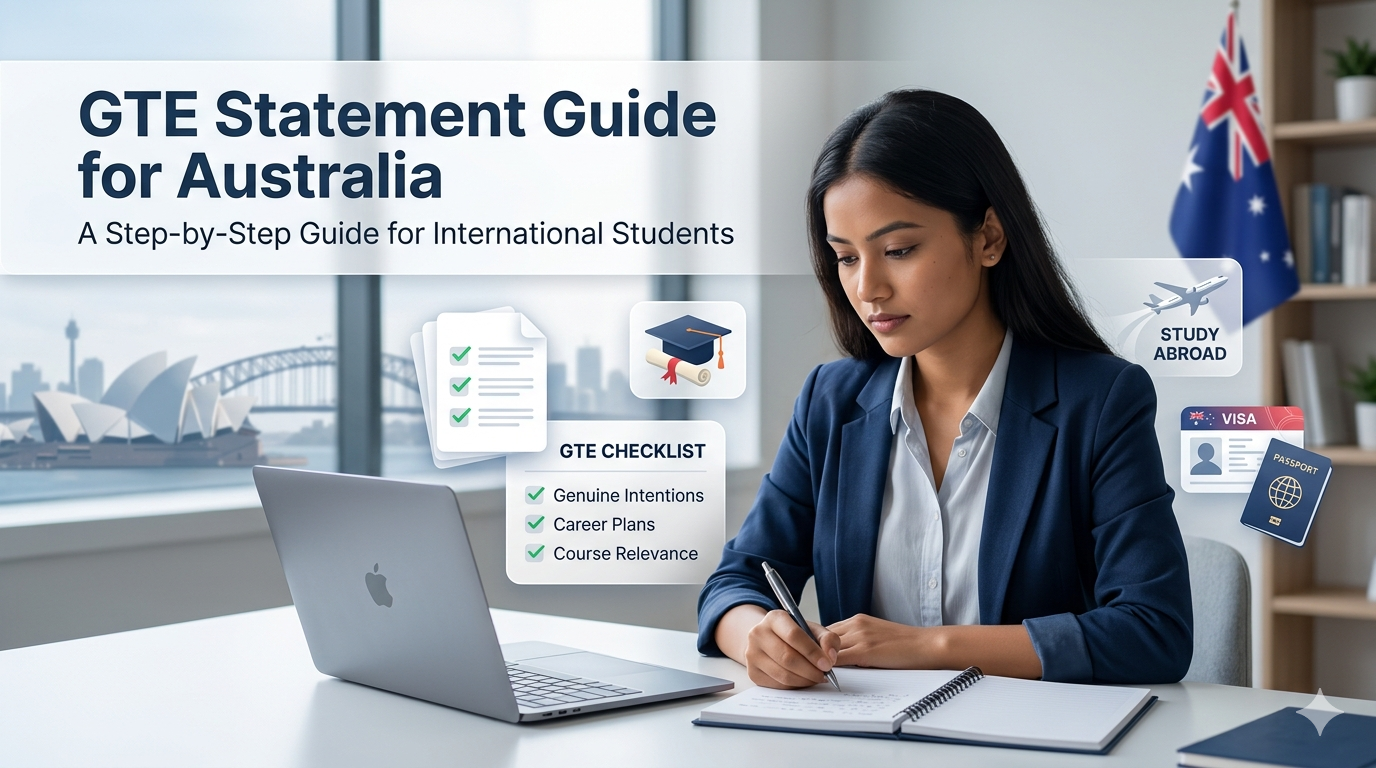
If you are planning to study in Australia, you will quickly come across something called the Genuine Temporary Entrant (GTE) statement. It might sound formal or even intimidating at first, but in reality, it is simply your chance to explain your story. Think of it as a personal narrative where you clearly show that your intention to study in Australia is genuine and temporary.
The Australian government introduced the GTE requirement to ensure that international students are coming to the country primarily for education, not for long-term migration without proper pathways. This means your statement needs to reflect honesty, clarity, and a strong connection between your past, present, and future goals.
A well-written GTE is not about using complex language. It is about making your intentions believable. Immigration officers are trained to spot vague or generic answers, so your statement needs to stand out as real and personal. You are essentially answering one big question: Why Australia, and why this course, at this point in your life?
Students often underestimate this document, thinking their academic scores alone will secure the visa. In reality, the GTE can make or break your application. A strong GTE complements your documents and adds a human element to your application.
If you want to explore more guidance on studying abroad, you can also check helpful resources at https://newera.edu.np/ where expert counselors regularly share insights for students.
Why the GTE Statement Matters for Visa Approval
The GTE statement is not just another document. It is one of the most critical parts of your Australian student visa application. Immigration officers rely on it to assess your credibility, your motivations, and whether your plans make sense.
Imagine reviewing hundreds of applications every day. What would stand out? Not just grades or certificates, but a clear, consistent story. That is exactly what your GTE needs to deliver. It should connect your academic history, your chosen course, and your career goals into one logical path.
Statistics show that a significant number of student visa refusals are linked to weak or unclear GTE statements. This often happens when students copy templates or fail to explain gaps in their education or work history. A generic statement signals a lack of authenticity, which raises red flags immediately.
Another important factor is consistency. Your GTE must align with the rest of your documents. If your financial records, academic background, and career goals do not match what you say in your statement, it weakens your case.
A strong GTE does three things effectively. It shows that you are a genuine student, it proves that your course choice is logical, and it reassures authorities that you plan to return home after completing your studies.
For more tips on visa preparation and documentation, you can explore https://newera.edu.np/blog, where detailed guides are regularly updated for students aiming to study abroad.
Key Elements of a Strong GTE Statement
Personal Background and Academic History
Your GTE statement should begin with a clear and honest overview of your personal background. This is where you introduce yourself beyond just your name and qualifications. Think about your upbringing, your education journey, and any experiences that shaped your decision to study further.
A strong academic history section does more than list degrees. It tells a story. For example, instead of simply stating that you completed high school, explain what subjects you enjoyed and how they influenced your career direction. Did you develop an interest in business, IT, or healthcare? That connection matters.
If you have any gaps in your education or work history, address them directly. Avoiding these gaps can make your application look suspicious. Instead, explain what you were doing during that time. Maybe you were working, preparing for exams, or dealing with personal matters. Honesty here builds trust.
You should also mention any relevant work experience. Even part time jobs or internships can strengthen your profile if they align with your chosen course. They show that you are serious about your field and have already taken steps toward your career.
This section is your foundation. It sets the tone for the rest of your statement. When written well, it gives the visa officer confidence that your application is genuine and thoughtfully prepared.
Reasons for Choosing Australia
Choosing Australia should never sound random in your GTE statement. You need to clearly explain why this country is the best fit for your education and career goals. Simply saying that Australia has good universities is not enough. You need to go deeper.
Australia is known for its globally recognized education system, practical learning approach, and multicultural environment. But how do these factors connect to you personally? That is the key question. Maybe your chosen course is more industry focused in Australia compared to your home country. Maybe the teaching methods align better with your learning style.
You can also mention factors like post study exposure, advanced facilities, and international recognition of Australian qualifications. According to recent education reports, Australia hosts over 700,000 international students, which reflects its strong reputation worldwide.
Another important aspect is comparing your options. Why not study in your home country or another country? A clear comparison shows that you have done your research and made an informed decision.
Keep your explanation realistic and specific. Avoid exaggerated claims or overly promotional language. Immigration officers are not looking for marketing content. They are looking for genuine reasoning.
For more insights on choosing the right study destination, you can visit https://newera.edu.np/ where expert advice is tailored for Nepali students planning to study abroad.
Course Selection Justification
Your course choice is the heart of your GTE statement. This is where many students struggle because they fail to connect their past education with their future goals. The course you choose should make sense based on your academic background or work experience.
Start by explaining what the course is about and why it interests you. Then connect it to your previous studies. For example, if you studied management and now want to pursue a Master in Business Analytics, explain how your background supports this transition.
It is also important to show how this course will help you achieve your career goals. What skills will you gain? How will these skills benefit you when you return to your home country? Be specific here.
Avoid choosing a course that seems unrelated without proper justification. If you are changing fields, provide a strong explanation. Maybe you discovered a new interest through work experience or personal projects.
This section should clearly answer one question: Why this course, and why now? When your answer is logical and well explained, it strengthens your entire application.
Future Career Plans
Your future plans play a major role in convincing visa officers that you are a genuine temporary entrant. You need to show that your education in Australia is part of a bigger plan that continues in your home country.
Start by describing your short term goals after graduation. What kind of job do you want? In which industry? Then move to your long term plans. Do you want to start your own business, take on leadership roles, or contribute to a specific sector?
Make sure your plans are realistic and aligned with your chosen course. Avoid vague statements like “I want to be successful.” Instead, provide clear and measurable goals.
You can also mention opportunities in your home country. For example, if your country has growing demand in your field, highlight that. This strengthens your case by showing strong ties to your home country.
A well defined career plan not only improves your GTE but also gives you clarity about your future. It shows that you are not just studying for the sake of going abroad, but with a clear purpose in mind.
Structuring Your GTE Statement
Introduction Paragraph Tips
Your introduction is your first impression, and it sets the tone for everything that follows. A strong opening paragraph should be clear, direct, and personal. You do not need to overcomplicate it with fancy language. Instead, focus on briefly introducing who you are, what you are applying for, and your main intention behind studying in Australia.
Think of your introduction as a snapshot of your entire story. In just a few sentences, the visa officer should understand your academic background and your purpose. For example, you might mention your most recent qualification, your chosen course in Australia, and a short line about your career goal. This immediately creates context and keeps the reader engaged.
Avoid starting with generic phrases like “I am writing this statement to apply for a visa.” That sounds robotic and overused. Instead, make it natural and conversational. Imagine you are explaining your journey to someone who genuinely wants to understand your plans.
Another important tip is to keep your introduction aligned with the rest of your statement. If your opening sounds strong but the rest of the document lacks clarity, it creates inconsistency. Your introduction should act as a promise that your body paragraphs will fulfill.
A well written introduction builds confidence. It shows that you know what you want and that you are serious about your plans. This is exactly the kind of tone that immigration officers look for when reviewing GTE statements.
Body Paragraph Development
The body of your GTE statement is where your story truly unfolds. This is where you connect all the dots between your past, present, and future. Each paragraph should have a clear purpose, and together they should form a logical flow that is easy to follow.
Start by expanding on your academic background and work experience. Then move into your reasons for choosing Australia and your specific course. Finally, explain your future career plans in detail. Each section should smoothly transition into the next, creating a natural progression of ideas.
One effective way to develop strong body paragraphs is by using real examples. Instead of saying you are passionate about a field, explain how that passion developed. Maybe it started during a school project, an internship, or a job experience. These details make your statement more believable and engaging.
Clarity is key here. Avoid long, confusing sentences or unnecessary repetition. Each paragraph should focus on one main idea and support it with relevant details. If your writing feels scattered, it becomes difficult for the visa officer to understand your intentions.
Also, make sure your tone remains consistent throughout. Do not switch between overly formal and casual language. Keep it natural, honest, and professional.
When done right, your body paragraphs create a compelling narrative that answers every question an immigration officer might have. It leaves no room for doubt about your intentions.
Conclusion That Reinforces Intentions
Your conclusion is your final chance to leave a strong impression. It should not introduce new information but instead reinforce everything you have already explained. Think of it as a summary that ties your entire statement together.
In your conclusion, briefly restate your purpose for studying in Australia and your commitment to returning to your home country after completing your studies. This is crucial because the GTE requirement focuses heavily on your temporary intent.
Keep your closing simple and confident. Avoid sounding uncertain or overly emotional. You want to leave the reader with a clear sense that you are focused, prepared, and genuine.
A good conclusion also reflects consistency. It should align perfectly with your introduction and body paragraphs. If your entire statement has been logical and well structured, your conclusion will feel natural and complete.
Many students rush this part, but it deserves attention. A strong ending can reinforce trust and leave a lasting positive impression on the visa officer reviewing your application.
Common Mistakes to Avoid in GTE Writing
Generic Statements
One of the biggest mistakes students make is relying on generic content. If your GTE statement sounds like something that could apply to anyone, it loses its impact immediately. Immigration officers read thousands of statements, so they can easily spot copied or template based content.
Generic statements often include phrases like “Australia has a high quality education system” without any personal connection. While this may be true, it does not explain why it matters to you specifically. Your statement should reflect your unique journey, not a general opinion.
To avoid this, focus on personalization. Talk about your experiences, your decisions, and your goals. Even small details can make a big difference. For example, mentioning a specific subject you enjoyed or a project you worked on adds authenticity.
Another issue with generic writing is that it feels disconnected. It does not create a clear link between your past and your future. This weakens your overall application and raises doubts about your intentions.
If you want your GTE to stand out, make it personal. Write it in a way that only you could. That is what makes it believable and effective.
Inconsistent Information
Consistency is critical in your GTE statement. If there are contradictions between your statement and your supporting documents, it creates immediate concern. Even small inconsistencies can lead to doubts about your credibility.
For example, if your academic records show one thing but your GTE tells a different story, it raises red flags. The same applies to your work experience, financial details, and future plans. Everything must align perfectly.
This is why it is important to review your entire application before submission. Make sure your dates, qualifications, and experiences match across all documents. If there are any differences, explain them clearly in your GTE.
Inconsistency often happens when students rush their statements or copy information from different sources without checking accuracy. Taking the time to review and edit your content can prevent these issues.
A consistent application builds trust. It shows that you are organized, honest, and serious about your plans. These are exactly the qualities immigration officers look for.
Lack of Career Clarity
Another common mistake is failing to clearly define your career goals. If your future plans are vague or unrealistic, it weakens your entire GTE statement. Immigration officers want to see that you have a clear direction and that your chosen course supports that direction.
Saying that you want to “build a successful career” is not enough. What kind of career? In which industry? In which role? These details matter. They show that you have thought carefully about your future.
A lack of clarity also makes your course choice seem random. If your goals are not well defined, it becomes difficult to justify why you chose a specific program in Australia.
To fix this, spend time researching your field. Understand the job market in your home country and identify opportunities that align with your skills. Then connect those opportunities to your course.
Clear career goals strengthen your GTE by showing purpose and direction. They make your application more convincing and easier to understand.
Expert Tips to Strengthen Your GTE
Use Evidence and Supporting Documents
A strong GTE statement is not just about words. It should be supported by solid evidence. This includes your academic transcripts, work experience letters, financial documents, and any other relevant proof.
When you mention something in your statement, make sure there is a document to back it up. For example, if you talk about your work experience, include an official letter from your employer. This adds credibility and strengthens your application.
Evidence also helps clarify your story. It provides context and supports your claims, making your statement more convincing. Without proper documentation, even a well written GTE can lose its impact.
Think of your GTE as the explanation and your documents as the proof. Together, they create a complete and reliable application.
Maintain Authenticity and Honesty
Authenticity is one of the most important factors in a successful GTE statement. Immigration officers are trained to detect exaggeration and false information. If your statement feels forced or unrealistic, it can harm your application.
Be honest about your journey, including any challenges or gaps. You do not need to present a perfect story. What matters is that your story is real and makes sense.
Writing in your own voice also helps. Avoid copying templates or using overly complex language. Keep your tone natural and conversational, as if you are explaining your plans to someone you trust.
Honesty builds trust, and trust is essential in the visa approval process. When your statement feels genuine, it becomes much more powerful.
Sample GTE Statement Breakdown
Real Example Analysis
Let’s break down what a strong GTE statement looks like in practice. Imagine a student who completed a Bachelor’s degree in Information Technology and is applying for a Master’s program in Australia.
The statement begins with a clear introduction that outlines the student’s background and purpose. It then moves into a detailed explanation of their academic journey, highlighting key subjects and projects that sparked their interest in IT.
Next, the student explains why Australia is the preferred destination. They mention specific universities, course structures, and practical learning opportunities that align with their goals. This shows research and genuine interest.
The course selection is justified by connecting it to both past studies and future plans. The student clearly explains how the program will help them gain advanced skills needed in their home country.
Finally, the statement outlines realistic career goals, including specific roles and industries. It emphasizes the intention to return home and apply the knowledge gained.
This kind of structured, detailed, and honest approach is what makes a GTE statement effective.
How New Era Education Helps You Prepare GTE
Writing a GTE statement can feel overwhelming, especially if you are doing it for the first time. This is where expert guidance can make a big difference. At https://newera.edu.np/, students receive personalized support to craft strong and effective GTE statements.
Experienced counselors help you identify your strengths, clarify your goals, and structure your statement properly. They also review your content to ensure it is clear, consistent, and aligned with visa requirements.
In addition to GTE preparation, New Era Education provides support for university selection, visa processing, and overall study abroad planning. Their guidance helps students avoid common mistakes and improve their chances of visa approval.
If you are serious about studying in Australia, getting professional help can save you time and increase your confidence throughout the application process.
Conclusion
Writing a strong GTE statement for Australia is not about using complicated words or copying templates. It is about telling your story in a clear, honest, and logical way. Every part of your statement should connect your past experiences with your future goals.
When you focus on authenticity, structure, and clarity, your GTE becomes more than just a requirement. It becomes a powerful tool that supports your entire visa application. Take your time, review your content carefully, and make sure every detail aligns with your documents.
With the right approach and proper guidance, you can create a GTE statement that truly reflects your intentions and increases your chances of studying in Australia.
FAQs
1. What is the ideal length of a GTE statement?
A GTE statement is usually between 500 to 1000 words, depending on your background and the complexity of your case.
2. Can I use a sample GTE statement?
You can refer to samples for structure, but avoid copying them. Your statement must be unique and personal.
3. Is GTE still required for Australia student visas?
Policies can change, so always check the latest visa requirements or consult experts like New Era Education.
4. How long does it take to write a GTE statement?
It typically takes a few days to a week, including drafting, reviewing, and editing.
5. Can professionals help with GTE writing?
Yes, experts can guide you, review your content, and help you avoid common mistakes.
YOU MAY ALSO LIKE