Exploring the World: The Ways Studying Abroad Can Expand Your Mindset
- By Admin
- June 11, 2026
Australia remains one of the most popular destinations for international students. According to recent Australian government education data, more than 622,000 international students were studying in Australia during early 2026. Students from countries like China, India, Nepal, Vietnam, and Bangladesh continue to choose Australia because of its globally recognized universities, excellent quality of life, and strong career opportunities. Recent data also shows that Nepal is among the top source countries for international students in Australia. This highlights how many Nepali students are actively pursuing Australian education opportunities today. However, the application process has become more competitive, and even small mistakes can lead to delays, visa refusals, or rejected university applications.
For many students, studying in Australia is a life-changing decision. It involves a significant investment of time, money, and effort. Unfortunately, many applicants focus only on getting admission and overlook critical parts of the process. Some choose courses without proper research, while others submit incomplete documents or fail to prepare financially. These mistakes can create unnecessary stress and even jeopardize a student’s dream of studying abroad. Understanding these common errors before starting your application can save you from costly setbacks.
If you are planning to study in Australia, it is important to approach the process carefully. Whether you are applying for a bachelor’s degree, master’s program, diploma, or vocational course, every step matters. Working with experienced education consultants can also make a significant difference. Students can explore professional guidance and application support through New Era Education to simplify the entire process.
Why Careful Planning Matters
Many students underestimate how detailed the Australian admission and visa process can be. Universities require academic records, proof of English proficiency, financial documents, identification papers, and personal statements. On top of that, student visa requirements have become stricter in recent years. Reports indicate that visa refusal rates have increased as authorities apply more scrutiny to applications and supporting documents. This means students need to be more careful than ever when preparing their applications.
Careful planning helps students avoid unnecessary delays. When you start early, you have enough time to gather documents, prepare for English language tests, compare universities, and understand financial obligations. Planning also allows students to identify suitable courses that align with their career goals. Instead of rushing through the process, students can make informed decisions that improve both admission and visa success rates.
Choosing a Course Without Research
One of the biggest mistakes students make is selecting a course simply because friends or family members recommend it. While advice from others can be helpful, every student has different interests, strengths, and career aspirations. Choosing a course without understanding its curriculum, career prospects, and industry demand can lead to disappointment later.
Students should research job opportunities connected to their chosen field. They should also examine future industry trends in Australia and globally. A course may sound attractive today but may not offer strong employment opportunities after graduation. Taking the time to understand what the course teaches and where it can lead professionally helps students make better decisions.
Before finalizing any course, students should compare multiple options and seek professional advice. Educational consultants can help students evaluate whether a particular program aligns with their academic background and long-term goals. This simple step can prevent years of frustration and regret.
Selecting the Wrong University
Another common mistake is focusing only on university rankings. While rankings are important, they should not be the only factor influencing your decision. Different universities have different strengths, teaching styles, support services, campus environments, and industry connections.
Some students choose a university because it is famous without checking whether it offers strong programs in their chosen field. Others ignore factors such as location, accommodation availability, tuition fees, and student support services. A university that ranks slightly lower but offers better practical training and industry exposure may actually be the better choice.
Students should carefully compare universities and institutions before applying. Useful information about Australian universities, admissions, and study pathways can often be found through education experts such as New Era Education Study Abroad Services.
Ignoring Entry Requirements
Every Australian university has specific admission requirements. These may include minimum academic scores, English language test results, prerequisite subjects, and additional supporting documents. Many students assume they meet the requirements without checking the details carefully.
Failing to meet entry requirements can result in application rejection. Students should review university websites and official course information before submitting applications. They should also verify whether they need IELTS, PTE, TOEFL, or another approved English language qualification.
Entry Requirements Checklist
| Requirement | Importance |
| Academic transcripts | Verify educational qualifications |
| English proficiency test | Demonstrate language ability |
| Passport | Identity verification |
| Statement of Purpose | Explain study goals |
| Financial documents | Support visa application |
| Recommendation letters | Strengthen application |
Taking time to verify these requirements can significantly improve your chances of success.
Submitting Incomplete Documents
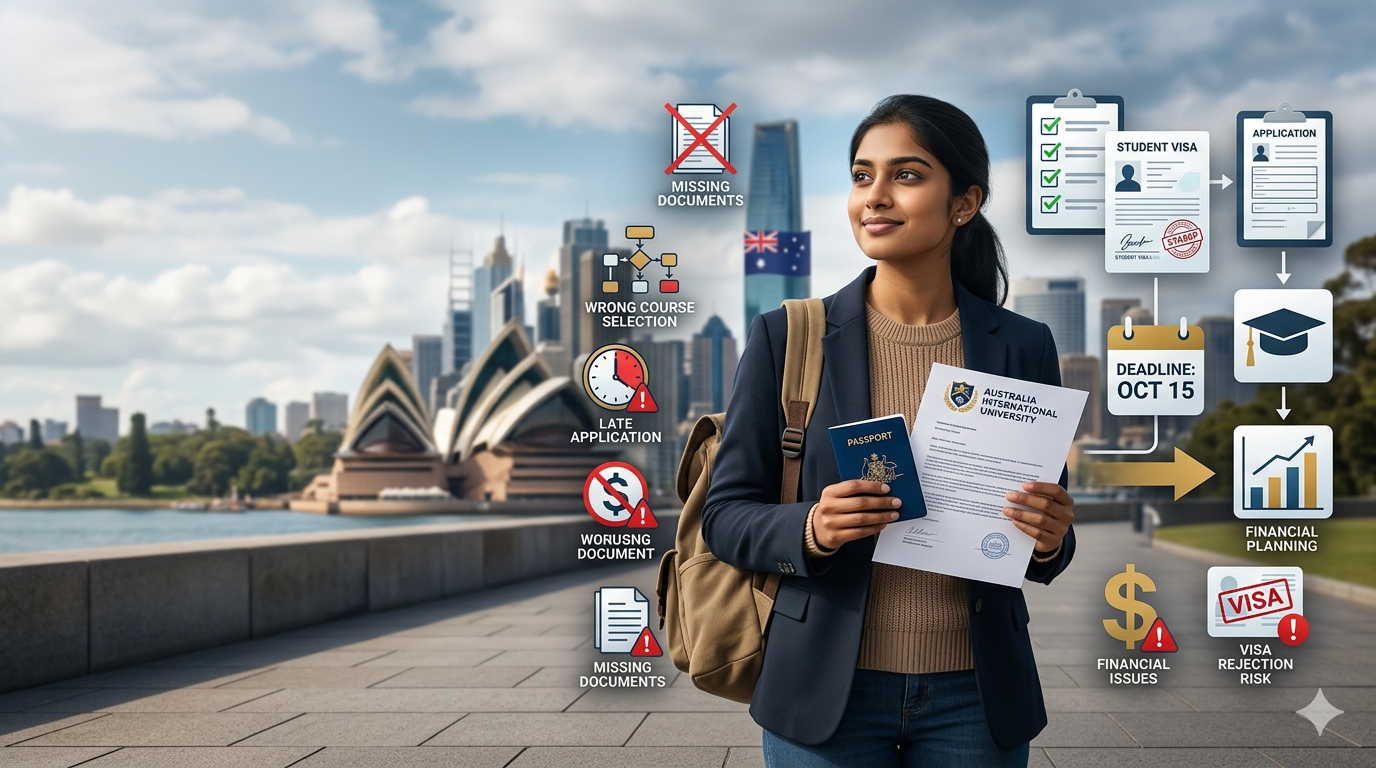
Incomplete applications are among the most avoidable mistakes. Universities and visa officers rely heavily on documentation to assess applications. Missing even one important document can delay processing or lead to rejection.
Students often forget to submit academic transcripts, financial evidence, identification documents, or English test results. Some submit outdated versions of documents or provide unclear scans. These small errors can create major complications during assessment.
Creating a detailed document checklist is one of the simplest ways to avoid this problem. Review every requirement multiple times before submission. If possible, ask a professional consultant to verify your application package before it is sent.
Writing a Weak SOP
The Statement of Purpose, commonly known as the SOP, plays a crucial role in both university admissions and visa applications. Yet many students treat it as a formality. Some copy SOPs from the internet, while others submit generic statements that fail to explain their goals clearly.
A strong SOP should explain why you chose your course, why you selected Australia, how the program fits your career plans, and how it relates to your previous education. It should be genuine, personal, and specific.
Students should avoid exaggerated claims and focus on presenting honest information. Visa officers often review SOPs carefully, and inconsistencies can raise concerns. A well-written SOP can strengthen an application significantly.
Poor Financial Planning
Financial preparation is another area where students often make mistakes. Studying in Australia involves more than tuition fees. Students must also budget for accommodation, transportation, food, health insurance, and personal expenses.
Recent visa policy changes and increasing costs have made financial planning even more important. Students should ensure they have sufficient funds and proper documentation to demonstrate financial capability. Financial evidence is a key factor during visa assessment.
Many students focus only on first-year expenses and underestimate future costs. Creating a realistic financial plan before departure helps avoid stress after arrival. Students should also research scholarship opportunities that may reduce their overall expenses.
Applying Too Late
Timing plays a critical role in the admission process. Many students wait until the last minute to apply. This leaves little room for document corrections, test retakes, or unexpected delays.
Universities have application deadlines, and visa processing can take time. Delayed applications can cause students to miss their intended intake. In some cases, they may need to postpone their studies by several months.
Starting the process early gives students more flexibility. Ideally, students should begin planning at least six to twelve months before their desired intake. Early preparation increases the likelihood of a smoother and less stressful application experience.
Providing Incorrect Information
Honesty is essential throughout the application process. Some students provide inaccurate information about academics, finances, employment history, or personal details. Even unintentional errors can create problems during verification.
Australian authorities have become increasingly focused on identifying fraudulent or misleading applications. Incorrect information can result in application refusal and may affect future visa opportunities.
Students should carefully review every document and application form before submission. Double-check dates, names, academic scores, and financial records. Accuracy is always better than rushing.
Ignoring Visa Rules and Policy Changes
Australian student visa policies continue to evolve. Students who rely on outdated information may make costly mistakes. Recent changes have affected visa fees, approval rates, documentation requirements, and application scrutiny levels.
Because immigration policies can change frequently, students should follow official government sources and work with trusted education consultants. Staying informed helps applicants prepare stronger applications and avoid unexpected challenges.
Students should also understand their responsibilities after arriving in Australia. Following visa conditions, maintaining satisfactory academic progress, and complying with work restrictions are all important for maintaining visa status.
Not Seeking Professional Guidance
Many students try to manage everything alone. While independent applications can be successful, professional guidance often reduces risks. Experienced education consultants understand university requirements, visa procedures, and current policy changes.
Consultants can help students select suitable courses, prepare documents, review SOPs, and submit complete applications. They can also provide updates regarding changing visa requirements and admission trends.
Students looking for reliable support can explore services offered by New Era Education Australia Study Services. Professional guidance can save time, reduce mistakes, and improve overall confidence throughout the process.
Conclusion
Applying to study in Australia is an exciting journey, but success depends on careful preparation. Many students face setbacks because they rush decisions, ignore requirements, submit incomplete documents, or fail to plan financially. With visa rules becoming stricter and competition increasing, avoiding these mistakes is more important than ever.
Research your course thoroughly, choose the right university, prepare accurate documents, and stay informed about policy changes. Most importantly, start early and seek professional guidance when needed. A well-prepared application not only improves your chances of admission but also helps you begin your Australian education journey with confidence.
FAQs
1. What is the most common mistake students make when applying to study in Australia?
Choosing a course without proper research and submitting incomplete documents are among the most common mistakes.
2. How early should I start my Australia study application?
It is recommended to begin planning at least 6 to 12 months before your intended intake.
3. Is an SOP important for Australian universities?
Yes. A strong SOP helps explain your study goals and can strengthen both university and visa applications.
4. Can financial documents affect visa approval?
Yes. Insufficient or unclear financial evidence can lead to visa delays or refusals.
5. Should I use an education consultant?
While not mandatory, experienced consultants can help avoid common mistakes and simplify the application process.
6. Where can I get professional guidance for studying in Australia?
Students can explore study abroad services and counseling support through New Era Education at https://newera.edu.np/.
YOU MAY ALSO LIKE